WASHINGTON – The United States has made headway in winning international support to confront the Islamic State, but Arab countries have been reluctant to make specific commitments of help and remain worried about the level of American follow-through, analysts say.
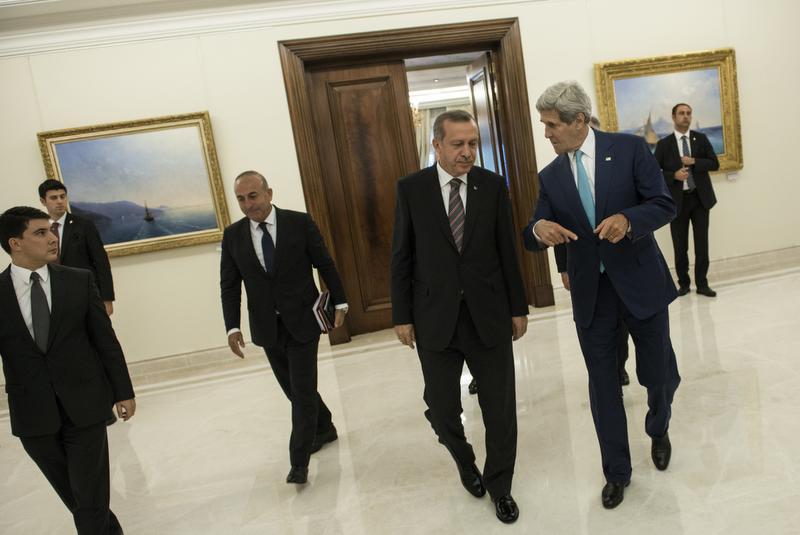
Secretary of State John Kerry was in the region this week, rallying support from Turkey and Arab nations to defeat the militants in their strongholds in Syria and Iraq. President Obama said building an international coalition is a key part of his strategy.
Kerry this week won pledges from 10 Arab countries to support U.S.-led efforts to fight the Islamic State. “We are seeing the coalition build in size and scope,” Rear Adm. John Kirby, the Pentagon press secretary, said on Friday.
Most countries haven’t specified yet how they will help. The administration has said assistance can come in a variety of forms, including training, humanitarian aid and help in cutting off funding to the militants.
Analysts say Middle Eastern countries remain worried that Obama may not follow through on his pledge to crush the Islamic extremists, which could leave these governments in an awkward spot if the extremists are not crushed.
“This is the root of the hesitation,” said Mustafa Alani, director of national security for the Gulf Research Center in Geneva. “The experience in the past is not encouraging.”
The civil war in Syria has been dragging on for more than three years, as moderate groups, al-Qaeda militants and the Islamic State — which is an al-Qaeda offshoot — all are mounting rebellions against Syrian President Bashar Assad’s regime.
The United States doesn’t need military power, but building an alliance is important to create political support, analysts said. Regional allies are needed “so that they don’t undercut us,” said James Jeffrey, a former U.S. ambassador to Iraq.
Sunni countries, such as Saudi Arabia, Jordan and Qatar, worry about the threat from the Islamic extremists, who also are Sunnis, as well as from Assad, who is backed by Iran, a Shiite power that the Sunni countries view as a threat.
“There’s no doubt that … everybody wants to see ISIS taken down,” Jeffrey said, using an acronym for the Islamic State.
But the president’s description of a limited operation against the Islamic State may undermine regional support, Jeffrey said.
Obama said he would not commit combat troops to the fight and likened the conflict to anti-terrorism efforts in Somalia and Yemen.
“If he’s serious that this is going to be another Yemen or Somalia, he’s already lost,” Jeffrey said.