source GAIA package: Sx_MilitaryTimes_M6201410305070057_5675.zip Origin key: Sx_MilitaryTimes_M6201410305070057 imported at Fri Jan 8 18:18:16 2016
The medical clinic tent is sparsely appointed, a concrete-floored warehouse corridor, papered with a nursery-room print of starfish and dolphins.
On the right, the main hallway opens into a triage room with four wooden surgical tables and cardboard boxes of first-aid equipment. To the left, adjacent rooms house a convalescent room with seven white-sheeted beds, and a well-stocked medical dispensary, which is kept filled by an Afghan first sergeant. Outside is a morgue refrigerator to store the bodies of those killed in action.
Once, Navy corpsmen received frequent calls for assistance as the Afghan medical staff worked to treat the combat wounded. Now, they’re just trying to figure out how to say goodbye.
On May 2, several Marines and two Navy corpsmen stopped by the primary medical facility for the 2nd Brigade of the Afghan National Army’s 215th Corps. They deliver six sturdy crates of surplus medical supplies: tourniquets, heating blankets, pressure dressings, stretchers.
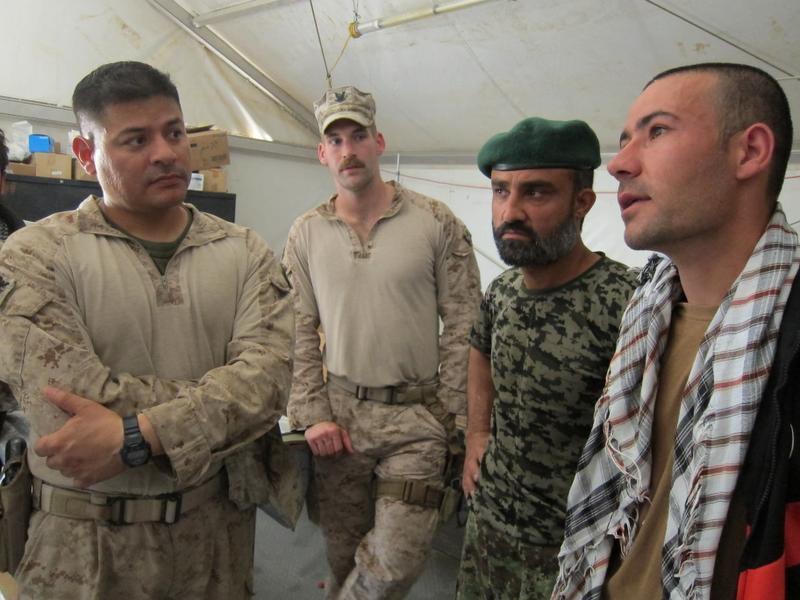
As the clinic’s staff members carry the crates in and stow them in storage, the head physician assistant, 1st Lt. Abdul Haq, engages the two corpsmen in conversation. Mindful that the Marine Strategic Forces Adviser Assistance Team will soon be gone, in keeping with drawdown operations, and the corpsmen with it, he seems anxious.
“You are real good doctors,” Hospital Corpsman 1st Class David Morales tells him. “You guys can accomplish anything. I’ve watched you with a lot of people, so I know.”
Despite his apprehension, Haq speaks proudly of his own accomplishments. Trained by Italians in Kabul, he oversees a team of nine PAs and eight medics.
“I’ve removed four to five bullets here,” he said with a nervous laugh, indicating the triage and surgical center.
The clinic might get five combat casualties from the 2nd Brigade in a week, but it also treats the ill and injured. Those in need of a specialist or something the clinic is not equipped to provide — such as a blood transfusion — must be transported two hours to the 215th Corps’ larger medical facility at Camp Shorabak. Nonetheless, the clinic stays busy.
Haq is more interested in speaking with the corpsmen, though.
“I’ll find you on Facebook,” he says, as they prepare to leave.
The job of the Marine Strategic Forces Adviser Assistance Team, at this stage of the war, is more to provide encouragement than physical aid and instruction.
That can be difficult when that role means standing by while physician assistants struggle to treat a double amputee who is hemorrhaging blood.
Morales said that early into his deployment he came to the clinic to observe the treatment of a man with a gunshot wound to the head.
“One of the PAs looked at me with this deer in the headlights look,” he said. “He was wrapping the head and I was trying to encourage him, give him confidence.”
The corpsmen would have to remind the staff of simple things, such as offering combat casualties morphine for their pain.
But that was then, Morales said.
“Now we show up and the patient’s already packaged,” he said. “It’s their game plan … they’ve all told me they’re ready to take the lead.”
Hospital Corpsman 3rd Class Kris Krysa said he still struggles with the realization that an Afghan combat clinic will never function like an American one. For example, he said, it will always be difficult for the PAs to save multiple amputees, due to the blood loss factor. And because many Afghan troops come from poor villages that would have to support and care for the wounded, the prevailing medical philosophy is not that life should be saved at all costs, as it is in the states.
But Krysa and Morales said they’ve gained increasing confidence in the abilities of the medical staff. As calls for them to assist in triage have become fewer and fewer, they’ve had more time to consider the relationships they’ve formed with the PAs, and how hard it will be to say goodbye.
“It’s really sad,” Krysa said. “You make a really close bond with them that you don’t expect when you come here … especially after treating combat casualties together. You just want to hang out with them.”
Krysa knows that unlike Haq, most of the clinic’s staff don’t have the technological resources to connect with him on Facebook. But he said he hopes for a day in the future when he might be able to take his family back for a visit.?