source GAIA package: Sx_MilitaryTimes_M6201210201020304_5675.zip Origin key: Sx_MilitaryTimes_M6201210201020304 imported at Fri Jan 8 18:18:05 2016
A routine Afghan-Marine foot patrol was thrown into chaos Dec. 2 when a car traveling more than 40 mph struck the point man, plunging both car and soldier violently into a nearby canal.
Fortunately for all involved, the grunts on scene took swift action.
Sgt. Zaheed of the Afghan National Army was sweeping for improvised explosive devices along a dark road when the fast-moving vehicle approached. He tried to wave the car to stop, but it didn’t slow. Caught between this threat and the rest of the patrol, Zaheed went for his weapon as a warning and waited until the last possible moment to step aside. It was too late.
In the dark night, the driver had not seen the troops, who were returning to Patrol Base Barcha in Helmand province after a resupply mission to a nearby outpost. When the driver finally spotted Zaheed’s desperate warnings, he panicked, swerved and struck the soldier.
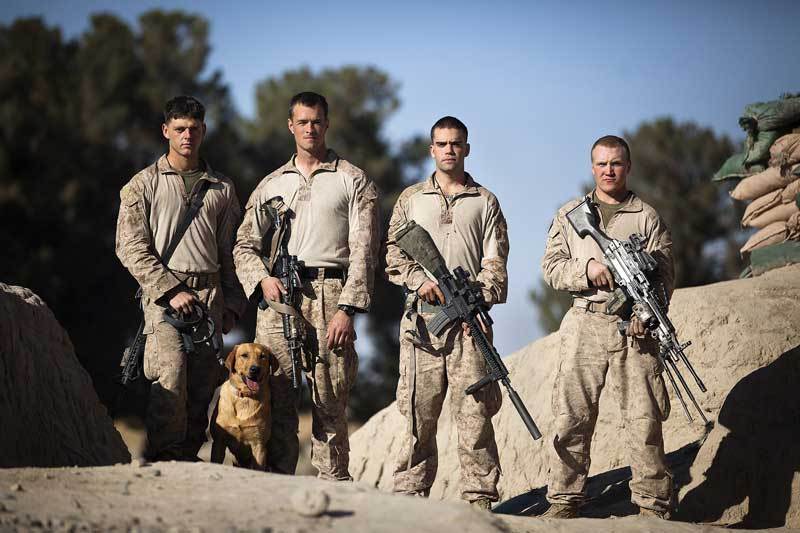
Without pause, Sgt. Matt Garst, 23, a squad leader with 2nd Platoon, Lima Company, 3rd Battalion, 3rd Marines, ordered his men to drop their gear and dive into the frigid, fast-moving canal. Meanwhile, three ANA soldiers and another Marine with an IED dog — Lance Cpl. James Blomstran, 22 — pulled security on the road.
The rescue was difficult, and there was an entire family in the car. Making matters worse, the December nighttime temperature in southern Afghanistan hovers around 35 to 40 degrees, and the canal was about 20 feet across and more than 12 feet deep.
“The current was extremely fast,” Garst wrote in an email to Marine Corps Times. “The vehicle was under water in a matter of seconds. Just swimming out you had to fight against it.”
With the floodgates open to supply water to fields during wheat season, the Helmand canal was more akin to a swift river. So swift, in fact, that Lance Cpl. Nicholas Dumke, 20, couldn’t make it to the car. He had to head back to shore but was able to pull a child and a man to safety with a 4-foot piece of cloth.
Lance Cpl. Ryan Gerrity, 21, zeroed in on Zaheed and pulled him to safety.
Garst located two women and an infant drowning. Panicked, they fought him, but he was able to push them above water, wrap his arms around them and get to shore.
Gerrity, now on shore, worked with Blomstran to pull another woman and child to shore while Garst returned to the car and pulled another man to safety.
All eight members of the Afghan family plus Zaheed had been rescued. The family was shaken but for the most part unharmed. One boy had minor cuts on his head.
“They were scared. Really scared. And I wanted to make sure everybody got out,” Garst wrote.
With everyone ashore, Gerrity and Garst treated Zaheed, who, although awake, was slurring his speech, upset and seriously injured. He had head lacerations and swelling, his ankle was shattered and he was hemorrhaging. But the Marines’ swift action kept him from going into shock. Gerrity elevated Zaheed’s feet and Garst fashioned a splint out of two antennas and gauze. A passing driver accompanied by an ANA soldier took Zaheed back to base. He was airlifted to Camp Dwyer within the hour.
The Marines advised the family to rest at the nearby home of a family friend.
“Talking with the people who live where I sent them to, they were highly grateful,” Garst said, “and called us saviors.”
Garst downplayed the heroics.
“We aren’t lifesavers,” he said. “We’re Marines.”
Garst said he and his men from the Hawaii-based unit did not anticipate a river rescue as part of their deployment but said they were compelled to act.
“If we would not have jumped in, that family would’ve drowned,” he said. “Each Marine who went in risked his own life.”
Zaheed is reportedly doing well and should be back on his feet in two to three months, Garst said, adding, “He was a good soldier. He was an awesome point man and a friend to the squad.”
Garst is no stranger to close calls or freak accidents. Not only has his unit seen its share of firefights since arriving in November, but in the summer of 2010, he stepped on an IED in Helmand and lived to tell about it. Then a corporal leading a patrol, he was flung above an 8-foot wall by the blast but suffered little more than the worst headache of his life.
“My first thought was, ‘Oh s—, I just hit an IED,” he said. “Then I thought, ‘Well, I’m standing. That’s good.’ “