KYIV, Ukraine — After years of trying to stop Iran-designed Shahed drones over its own cities, Ukraine is now sending counter-drone teams to Gulf partners — and pitching the help as a trade between equals.
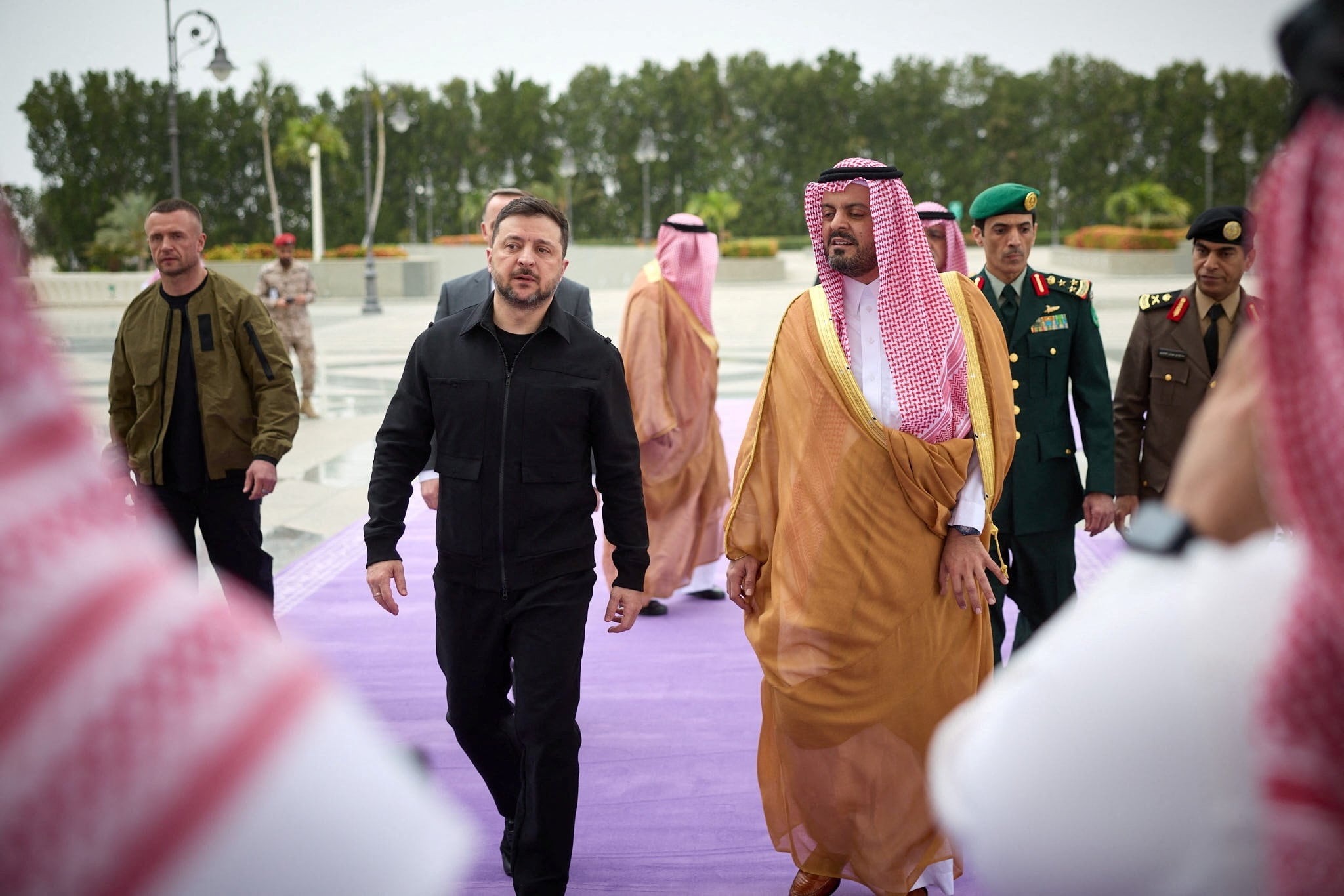
As the same one-way attack drones ripple across the Middle East, Ukrainian President Volodymyr Zelenskyy says Ukraine has deployed 228 counter-drone specialists across five regional partners — Jordan, Qatar, the United Arab Emirates, Saudi Arabia and Kuwait — to help intercept incoming threats, an expansion up from roughly 201 personnel a week earlier.
Zelenskyy has framed Ukraine’s pitch in explicitly transactional terms: If partners can spare the high-end interceptors Ukraine can’t get in sufficient quantity — Patriot Advanced Capability-3 missiles — Kyiv can help fill the gap with what it can scale faster and cheaper: interceptor drones, plus the crews and tactics that make them work.
“If they give them to us, we will give them interceptors,” Zelenskyy told reporters earlier this month, describing a PAC-3-for-interceptor swap.
He argued Ukraine’s industry could produce around 2,000 interceptor drones per day — a volume that, if it can be sustained, dwarfs the annual output of many premium missile-defense lines, he later said in a speech to the British parliament, per Ukrainska Pravda.
In the first three days of the Iran war, the United States and its Gulf partners burned through more than 800 Patriot interceptors — more than Ukraine got all winter — even as U.S. forces simultaneously struck over 2,000 targets across Iran.
That dual consumption rate is why Kyiv is trying to trade a cheap layer of defense for a scarce one, Ed Arnold, a senior research fellow at the Royal United Services Institute, told Military Times.
Ukraine is offering what it has learned to do at scale — stop drones — while still scrambling for what it cannot manufacture fast enough: the interceptors that matter when the threat is ballistic. Kyiv is trying to turn one shortage into leverage for the other.
PAC-3 interceptors can cost millions of dollars per shot, and production is limited.
The result is triage: Air-defense inventories are being stretched across U.S. forces and partners in the Middle East, Indo-Pacific planning, European requirements and Ukraine — leaving Kyiv stuck at the back of the line for the missiles it needs most.
“Interceptors like Patriot, forget it,” Arnold told Military Times earlier this month.
“The Ukrainians aren’t getting any more now because they’re all going to go to the U.S. military — either Middle East or Taiwan," he said.
“Out of those priorities, Ukraine is at the bottom if you’re the U.S.”
Ukraine’s alternative has become mass producing cheap, expendable drones engineered to last just a single season before replacement by a more advanced iteration for roughly the cost of a used car.
This price curve is why Ukraine’s drone ecosystem has become a strategic commodity just as the Iran conflict has expanded demand for air defense.
Kyiv says it has been fielding dozens of requests from allies for help with interceptor drones specifically, as the Middle East conflict intensifies with drones at its center.
Kyiv’s bet is that being indispensable in the Gulf also exposes it to retaliation from an enemy that has, so far, only helped Russia secondarily.
An Iranian member of parliament said March 14 that Ukraine’s support to Gulf states made it Iran’s “legitimate war target.”
For Kyiv, that kind of warning doesn’t change the logic — it underlines it: The same Shaheds that hit Ukrainian cities are now hitting partners across the Gulf, and Ukraine is betting that helping contain the threat abroad can translate into more protection at home.
The Iran war has also delivered another indirect hit to Ukraine through the disruption in energy markets that has bolstered Russian oil sales — especially after the White House suspended economic sanctions against the Kremlin to ease the crisis.
Brent crude oil has shot above $100 per barrel in recent weeks, up sharply since the war began, and analysts say higher prices expand Russia’s fiscal room to sustain a long war.
A senior official in Kyiv, speaking on condition of anonymity to discuss sensitive negotiations, described the price spike as handing leverage back to Russia, right when the country appeared to have started feeling the economic strain of over four years of all-out war.
“This is throwing a massive lifeline to Putin. He can’t take full advantage yet, but within a couple of months we will see the effect hit Ukraine — and I’m worried it will be negative.”
There are other hurdles to overcome, too.
Although Kyiv may already be producing a surplus of killer flyers, there is still a bureaucratic catch that has plagued the country for years: Ukraine’s wartime export restrictions have not fully kept pace with demand.
Manufacturers are still not permitted to sell abroad without official approval, even as they field inquiries for purchases from dozens of countries.
The deployment of specialists is one way to export capability without exporting hardware — at least until permits and contracts catch up.
Kyiv says neither it nor its partners can afford a symbolic partnership any longer — not as adversaries rearm and air-defense inventories thin.
“Russia is preparing for a broader attack against the alliance in the coming years,” Adm. Pierre Vandier, NATO’s supreme allied commander transformation, said during a recent visit to Kyiv.
He argued that NATO needs to accelerate how fast it turns battlefield lessons into real capability while upping weapons production across the board.
“We are in a moment where we are in a hurry. We need to ramp up this production, and it’s a complex weapon. So it will take some time,” Vandier said.
The problem is not just capability — it is consumption: High-end interceptors are being burned faster than they can be replaced by the West.
That reality is why Arnold argues Washington should treat Ukraine’s defense industry less like a stopgap and more like a capacity it can build up.
“If the U.S. [is] going to not be able to provide any long-range strike in the future, then actually invest in Ukrainian organic production,” he said.