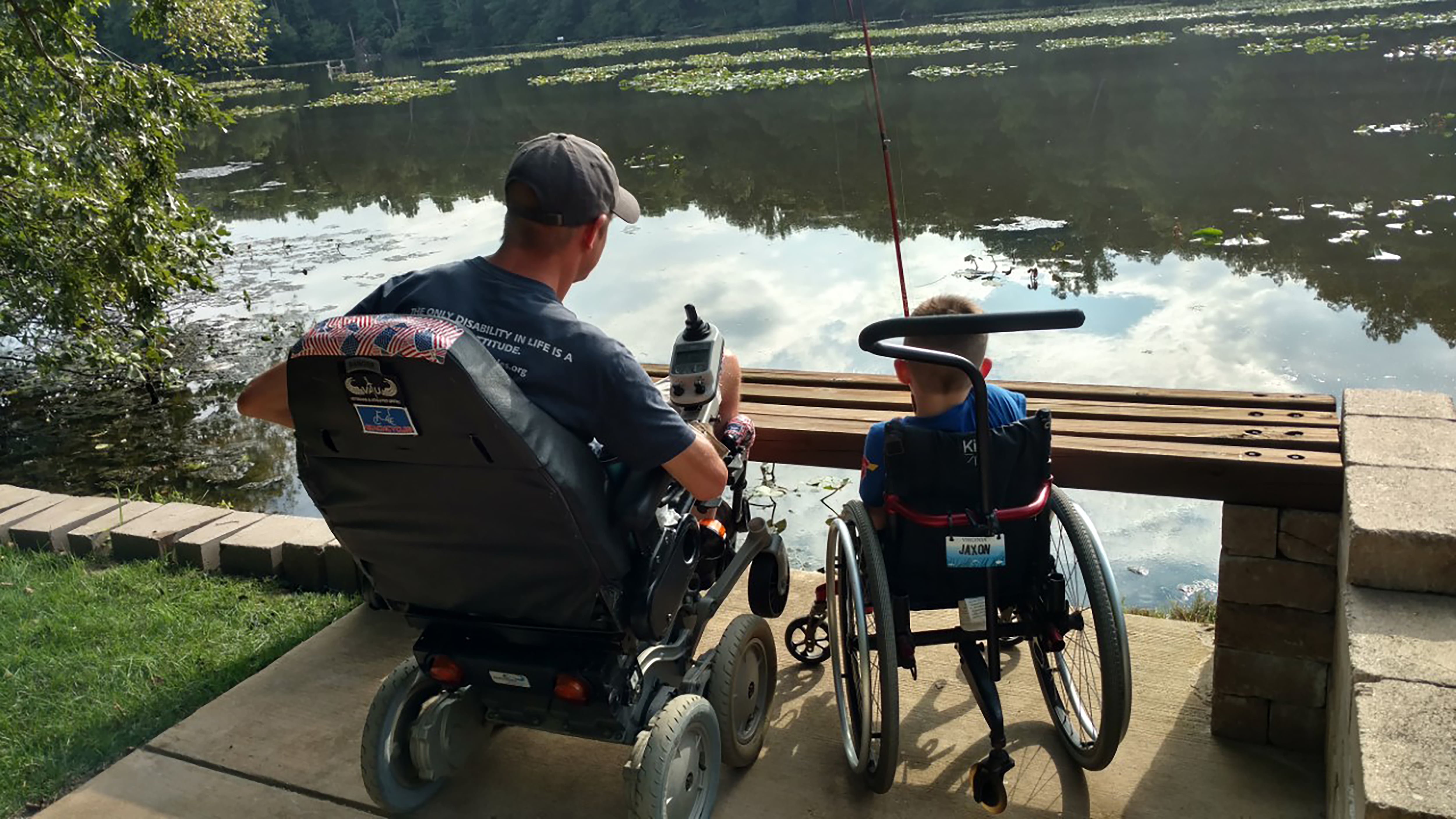
After serving 13 years in the U.S. Army, including deployments to Iraq and Yemen, my life took a drastic turn. A car accident left me with a C5-C6 spinal cord injury and permanent paralysis. In that moment, my future, and everything I’d worked toward, seemed to disappear.

A Lifeline for Millions
Thanks to the National Paralysis Resource Center (NPRC), I found a new path forward.
The NPRC, founded and administered by the Christopher & Dana Reeve Foundation, was a lifeline. It gave me more than resources; it gave me perspective. I learned that while life after paralysis would be different, my goals were still within reach. Through their mentoring and support, I’m proud to share that I am now pursuing a law degree, something I once thought impossible.
And I’m not alone. Millions of Americans affected by paralysis, stroke, multiple sclerosis, and ALS have turned to the NPRC for support. For many, it’s the only place to find comprehensive, coordinated help across state lines.
Threat of Elimination
Now, that lifeline is under threat.
The federal government’s 2026 budget proposal calls for the complete elimination of funding for the NPRC and other vital programs that serve people with disabilities. If enacted, this would reverse decades of progress and leave countless families without the support they desperately need.
However, both the House and Senate Appropriations Committees reversed this cut and recommended level funding for the NPRC in their fiscal year 2026 (FY26) funding recommendations. Yet, funding the NPRC remains a critical issue as a final government budget for FY26 has not yet been approved.
Strong Support, Proven Impact
Since its founding in 2002, Congress has consistently recognized the NPRC’s value through strong bipartisan support, which is backed by results. The NPRC has awarded over $48 million to 4,000 nonprofit projects. These range from communication devices to help the caregivers of nonverbal children living with cerebral palsy to adaptive community sports and recreation opportunities. NPRC has connected 27,000 individuals with peer mentors and supported 1.8 million people through online resources.
The annual $10.7 million investment in the NPRC also helps prevent secondary health complications, reduces long-term care costs, and promotes independence—saving money and improving lives.
National Infrastructure Matters
Some argue these services could be handled at the state level. But state-based pilot programs have proven inefficient and duplicative. A national approach ensures consistent standards, scalable programs, and coordinated care - especially critical for rural communities and areas with limited specialists.
It also allows the NPRC to work directly with the Department of Veterans Affairs and the Department of Defense, a vital approach for veterans like me.
Charity Can’t Fill the Gap
There’s a misconception that private philanthropy can replace federal support. It can’t. While generous, charitable funding is limited and already spread thin across countless causes. Major foundations haven’t stepped in to offset proposed cuts - and realistically, they can’t. Further, the federal government has a long-held and rightful responsibility to fund programs and projects of national importance, from infrastructure to public health. Neither local nor state governments, nor the private or nonprofit sectors, have the capacity to provide the same level of support, and a cascade of negative consequences would result should the federal government discontinue this obligation.
Without federal funding, the NPRC cannot survive.
A Smart, Compassionate Investment
Cutting the NPRC would save pennies in the short term, only to cost taxpayers hundreds of millions later in emergency care, institutionalization, and lost productivity.
Lawmakers must understand investing in the NPRC supports not just patients, but veterans, parents, caregivers, and workers rebuilding their lives. It’s a smart, compassionate investment in Americans who want to contribute, thrive, and lead fulfilling lives.
Congress must protect this vital resource for me, for other veterans, and for the millions of Americans living with paralysis. To learn more about the NPRC, please visit ChristopherReeve.org.
###