The Marine Corps plans to combine water survival training with the service’s previously separate underwater egress training, a change that will result in more demanding swim tests, Military Times has learned.
Under guidance posted in a March 6 Marine Administrative Message, or MARADMIN, Marines will be required to train and certify in the new standards beginning Oct. 1, 2026.
According to the guidance, the changes are intended “to increase unit readiness and enhance capabilities in maritime environments” across the fleet while also improving “individual Marine comfort level in the water.”
In layman’s terms, the service is adopting a “building blocks” approach to training, Maj. Hector Infante, the communications director at Marine Corps Training and Education Command, explained in an email to Military Times.
“While basic water survival skills are introduced during recruit training, the new order places a strong emphasis on continuous training and qualification opportunities for Marines throughout their careers,” Infante said.
The push for training that results in competency in the water has been ongoing. As Military Times previously reported, the Training Command has been exploring ways to improve upon Marines’ swimming proficiency since 2022.
Under the updated guidance, Marines will qualify across a spectrum that will now include five water survival levels: Basic, Novice, Competent, Proficient and Advanced.
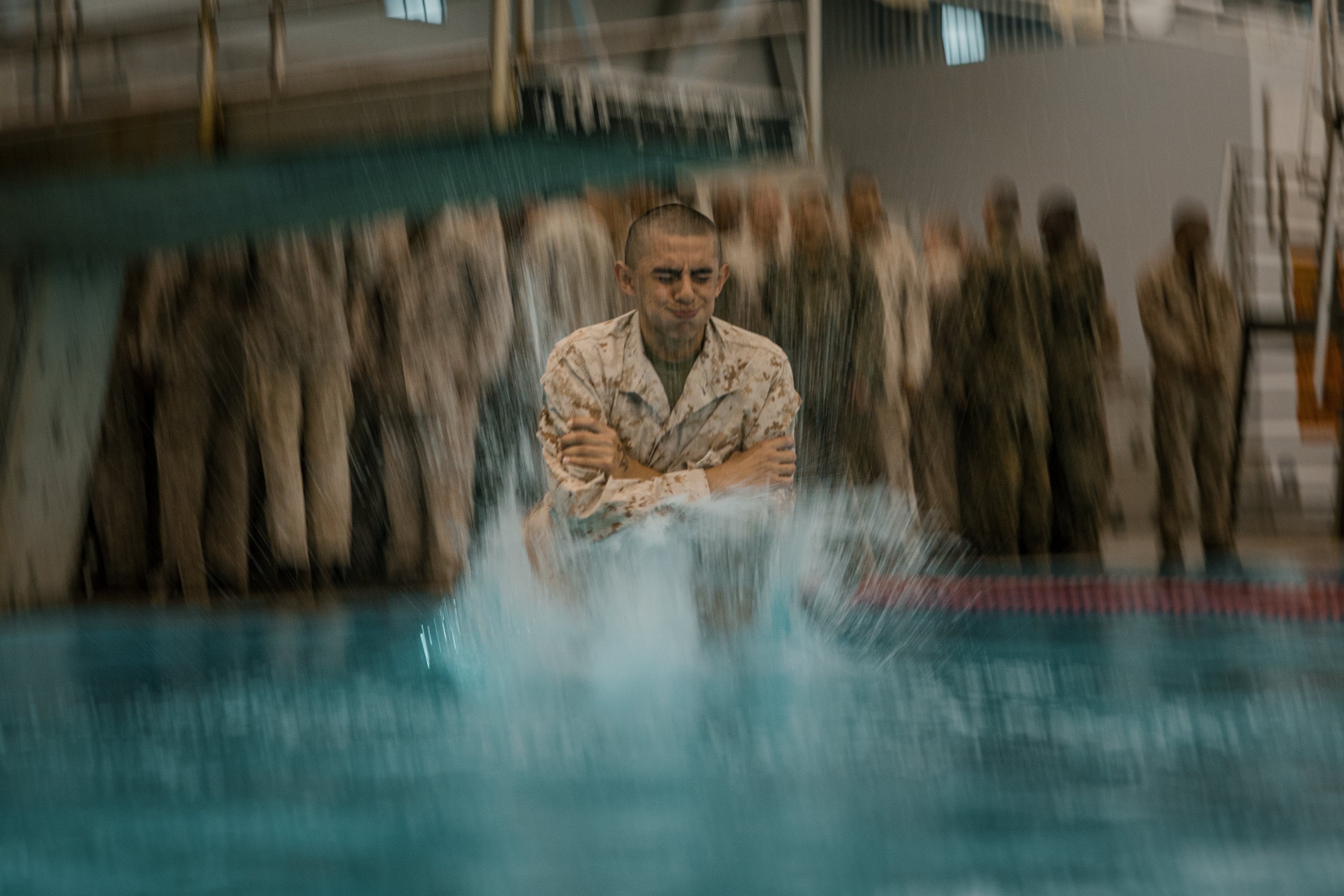
“Basic,” however, is only a temporary qualification given to recruits who pass the swim qualification test during boot camp. The test to meet minimal standards includes jumping from a 10-foot tower into a pool, treading water for four minutes and swimming 25 meters while wearing gear.
After boot camp, Marines will be expected to qualify at the Novice level or higher, or will need to receive an exemption waiver, according to the guidance. Those who fail to do so could face administrative counseling.
Infante said that at each qualification level, the amount of time Marines must tread water increases, and each service member is expected to demonstrate additional swimming techniques.
For example, “Basic and Novice levels require demonstrating one stroke, Competent requires two, Proficient requires three, and Advanced requires proficiency in all four (front crawl, breaststroke, sidestroke and backstroke),” he wrote.
“The goal is for every Marine to consistently improve their aquatic skills whenever possible,” Infante added in the email.
The updated standards will also be incorporated into Marine Corps performance evaluations through the Junior Enlisted Performance Evaluation System and the Performance Evaluation System, according to the new guidance.