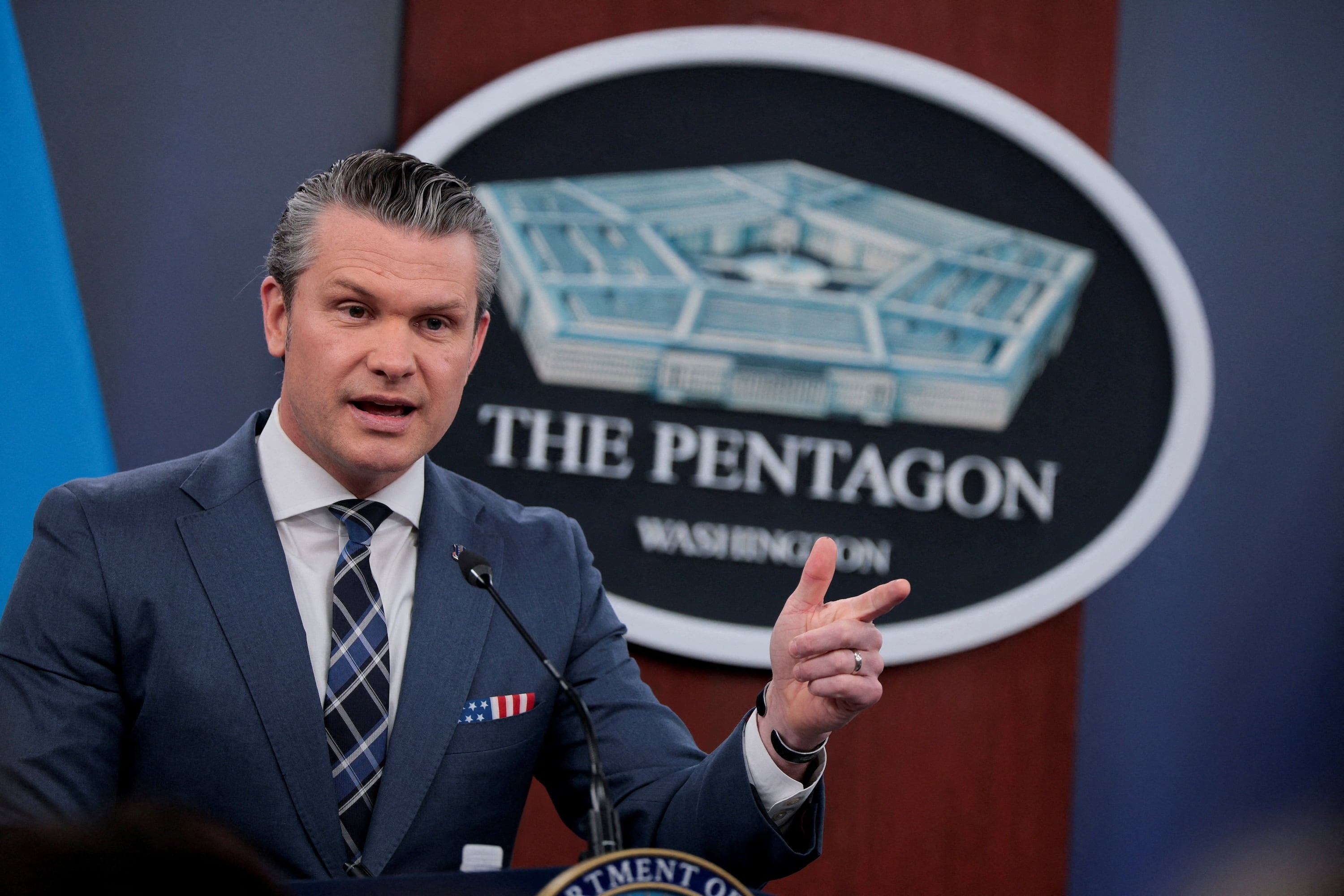
Defense Secretary Pete Hegseth on Thursday signed a directive allowing service members to request permission to carry privately owned firearms on military installations while off duty, the Pentagon said in a statement.
“The War Department’s uniformed service members are trained at the highest and unwavering standards. These warfighters — entrusted with the safety of our nation — are no less entitled to exercise their God-given right to keep and bear arms than any other American,” Hegseth announced in a video posted to social media.
The memorandum instructed installation commanders to consider requests with a “presumption of approval,” reversing what Hegseth described as a system that made it “virtually impossible for troops to carry or store personal firearms in accordance with state laws, the Pentagon said in a statement on Thursday.
The policy builds on existing authority under the 2016 National Defense Authorization Act, the Pentagon said, and the new guidance directs Pentagon officials to update regulations to formalize the process for approvals.
Hegseth framed the move as a constitutional issue and in response to recent active-shooter situations on military installations. He specifically cited a 2019 attack at the Naval Air Station in Pensacola, Florida, where three people were killed and eight others injured; a 2025 shooting that wounded five soldiers at Fort Stewart in Georgia; and a 2026 shooting at Holloman Air Force Base in New Mexico that killed one person and injured another.
In emergencies like those, he said, “minutes are a lifetime, and our service members have the courage and training to make those precious, short minutes count.”
The directive also applies to personnel working at the Pentagon, where the Pentagon Force Protection Agency must adopt the same presumption of approval. However, the policy does not allow personal to carry inside the building itself, instead permitting storage of the firearms in vehicles on Pentagon grounds.
Eve Sampson is a reporter and former Army officer. She has covered conflict across the world, writing for The New York Times, The Washington Post and The Associated Press.