The U.S. Army has advanced at least two bidders in its rotary-wing pilot training overhaul, moving closer to outsourcing how it trains new pilots.
Some aviators are hopeful about the change.
Bell and M1 Support Services this week announced advancement in the Army’s Flight School Next program, an initiative that would shift key parts of rotary-wing pilot training — including aircraft maintenance and both academic and flight instruction — to a contractor-owned, contractor-operated schoolhouse. The change would also include a new training aircraft.
Under the plan, contractors would provide a full training curriculum to produce 900 to 1,500 pilots annually, replacing the Army’s current initial entry rotary-wing training program. The change would mark the first time the Army has relied on a commercial system to train new aviators.
Congress has placed restrictions on the effort, requiring the Army to justify the new training model and demonstrate its effectiveness before funds can be used to move forward, according to provisions in the National Defense Authorization Act for fiscal 2026.
The Army has not publicly said how many companies remain in the competition.
The contractors have centered their plans on different training aircraft; Bell has proposed training on its Bell 505 helicopter, while the M1 bid would use Robinson Helicopters’ R66.
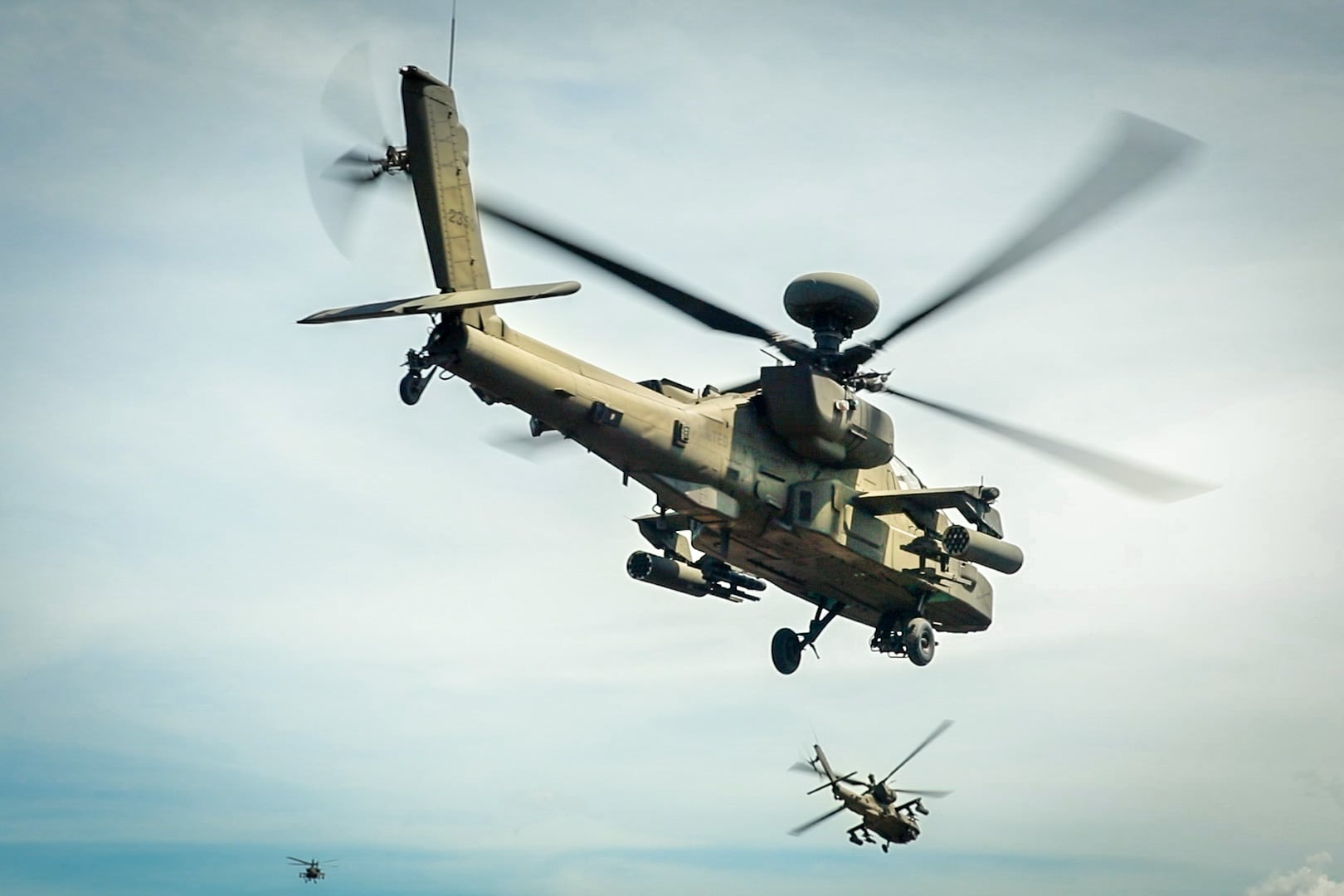
The Army currently trains rotary-wing pilots on the UH-72A Lakota helicopter, which some aviators say has advanced systems that are too forgiving and allow trainees to rely on technology while learning.
Kurt Rosell is a former signal soldier who left the service in 2016. He now works as a civilian helicopter flight instructor and has trained many military pilots as they transition to the civilian sector.
Rosell said he sees promise in possibility of a new training aircraft.
“For somebody that’s learning, you’ve got to have the foundation set before you add highly complex systems. With the R66 and the Bell — they are stripped trainers — you will get skills and a fuller understanding of the real discipline of flying before you rely on systems,” he said.
The Army’s overhaul comes as the military faces a broader rise in aviation accidents. Pentagon data released in 2025 showed a roughly 55% increase in severe accidents during the 2024 budget year compared to four years earlier.
Army aviation has faced safety challenges in recent years. In the first half of fiscal year 2023, over a dozen Army aviators died in helicopter crashes, prompting an aviation-wide stand down in April of that year. During the stand-down, the service discovered that its pilots were significantly less experienced than pilots were during the Iraq and Afghanistan wars.
The issue has drawn sharper attention since a January 2025 midair collision between an Army Black Hawk and a passenger jet near Washington, D.C., killed 67 people. A federal investigation found that the crash was the result of “systemic failures” across multiple agencies, including the Army and Federal Aviation Administration.
RELATED
Some former Army aviators are optimistic about the new proposal and say contractors are already widely used within the schoolhouse.
Jason Welch, a former Army officer and Chinook pilot who finished flight school in 2017, said the new model might place more focus on civilian flight requirements.
“A civilian owned and operated company is going to conduct their initial training like civilians would receive,” Welch said, adding, “this would likely contain more attention to federal flight regulations and other details that are often overlooked or skimmed over since the Army tends to focus on training its pilots to be Army pilots.”
Eve Sampson is a reporter and former Army officer. She has covered conflict across the world, writing for The New York Times, The Washington Post and The Associated Press.