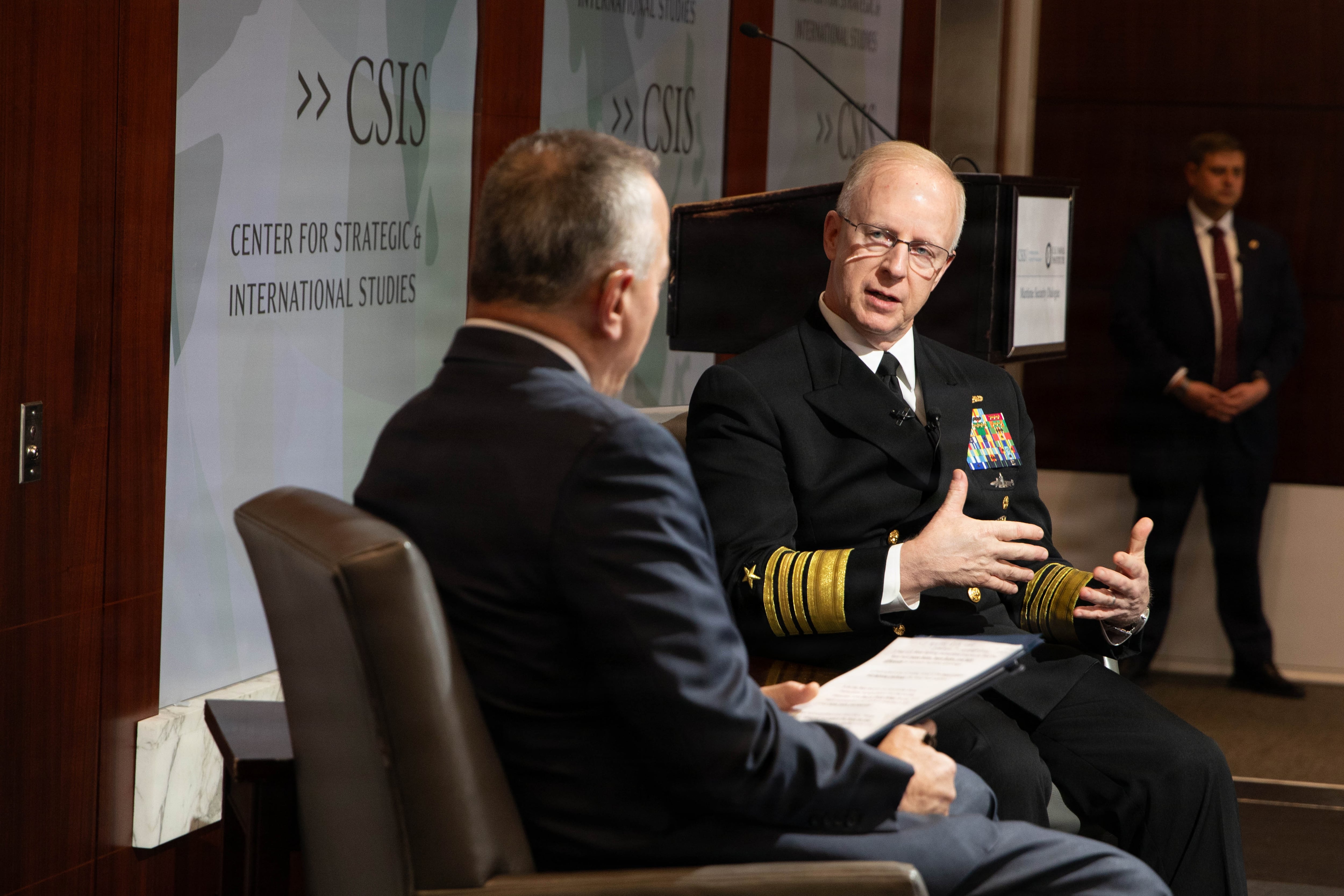
The chief of naval operations said Tuesday that he was confident in the U.S. Navy’s mine countermeasure capabilities in the face of potential mine warfare in Iran.
Adm. Daryl Caudle championed the effectiveness of the Navy’s three Independence-class littoral combat ships with the mine countermeasures mission package during a discussion at the Center for Strategic and International Studies in Washington.
“When the capability embarked on an LCS is full up, it’s a very, very good package,” Caudle said.
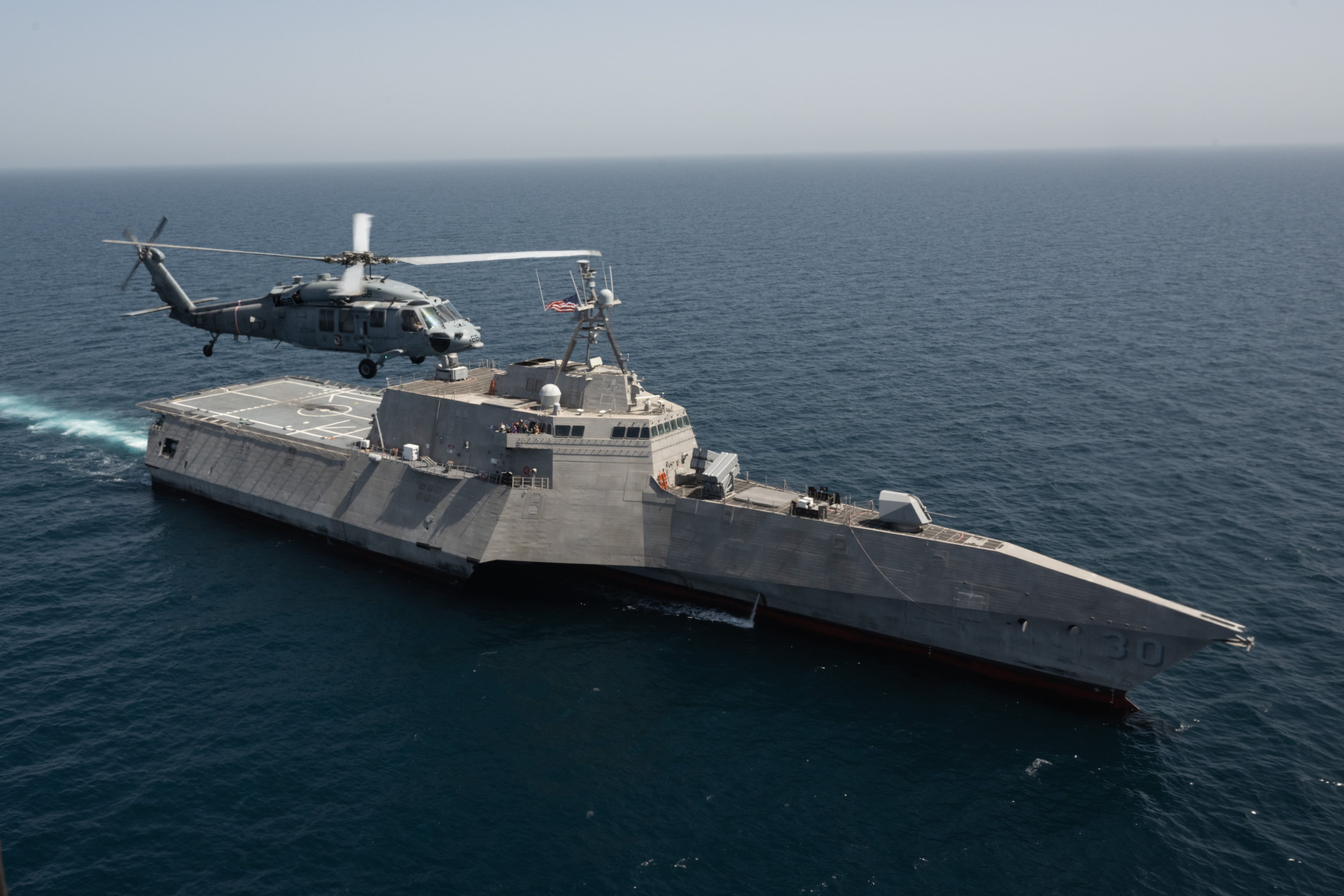
The U.S. Navy previously saw four Avenger-class mine countermeasures ships forward-deployed in Bahrain, but they were decommissioned in 2025 and replaced with three Independence-class littoral combat ships equipped with a mine countermeasures mission package.
The package includes an attached Sikorsky MH-60S Seahawk — which deploys its own suite of mine hunting and minesweeping technologies — and an unmanned surface vehicle that destroys mine threats with acoustic and magnetic generators.
Unlike the Avenger-class minesweeper, which is made of wood and can wade inside or near a mine-threat zone because of its low-magnetic signature, the LCS with the MCM mission package must remain outside mine-infested waters due to its aluminum construction.
RELATED
The CNO’s comments come several weeks after the Pentagon’s testing wing published a March 13 report saying it could not determine the reliability and effectiveness of the LCS with the MCM mission package.
Counter-mine systems deployed by the MH-60S “demonstrated low reliability prior to fleet release” and the unmanned surface vehicle aboard the LCS was “not operationally suitable,” according to the Office of the Director, Operational Test & Evaluation’s fiscal 2025 evaluation.
As of March 16, the LCS USS Canberra was operating in the Indian Ocean, while the other two littoral combat ships with the MCM mission package were conducting brief logistical stops in Malaysia.
The service has four Avenger-class minesweepers remaining in service, all of which are homeported in Sasebo, Japan.
Caudle listed the Sikorsky’s MH-53E Sea Dragon helicopter, which previously helped mine sweep the Persian Gulf during the Gulf War, and the minesweepers stationed in Japan as another available means for tackling mine countermeasures missions.
The MH-53E is currently out of production, with just 28 aircraft still in operation, according to the Naval Air Systems Command website.
Caudle also said the U.S. could rely on allies and partners, as well as expeditionary capabilities, seen with the Explosive Ordnance Disposal Mobile Unit 8 in the Black Sea, to tackle naval mine warfare.
The best solution to destroy mine threats is to have ships specifically built for the mission, the CNO said in reference to the Avenger-class minesweepers.
He admitted it was ironic that the retired minesweepers arrived back in the U.S. at the very moment that there was a sudden uptick in the need for mine countermeasures capabilities.
“You never are going to do mine countermeasures until you need it,” Caudle said. “You can be a bit vulnerable on how you lay that down on something that’s a very, very infrequent mission set, but very critical when you need it.”
Riley Ceder is a reporter at Military Times, where he covers breaking news, criminal justice, investigations, and cyber. He previously worked as an investigative practicum student at The Washington Post, where he contributed to the Abused by the Badge investigation.