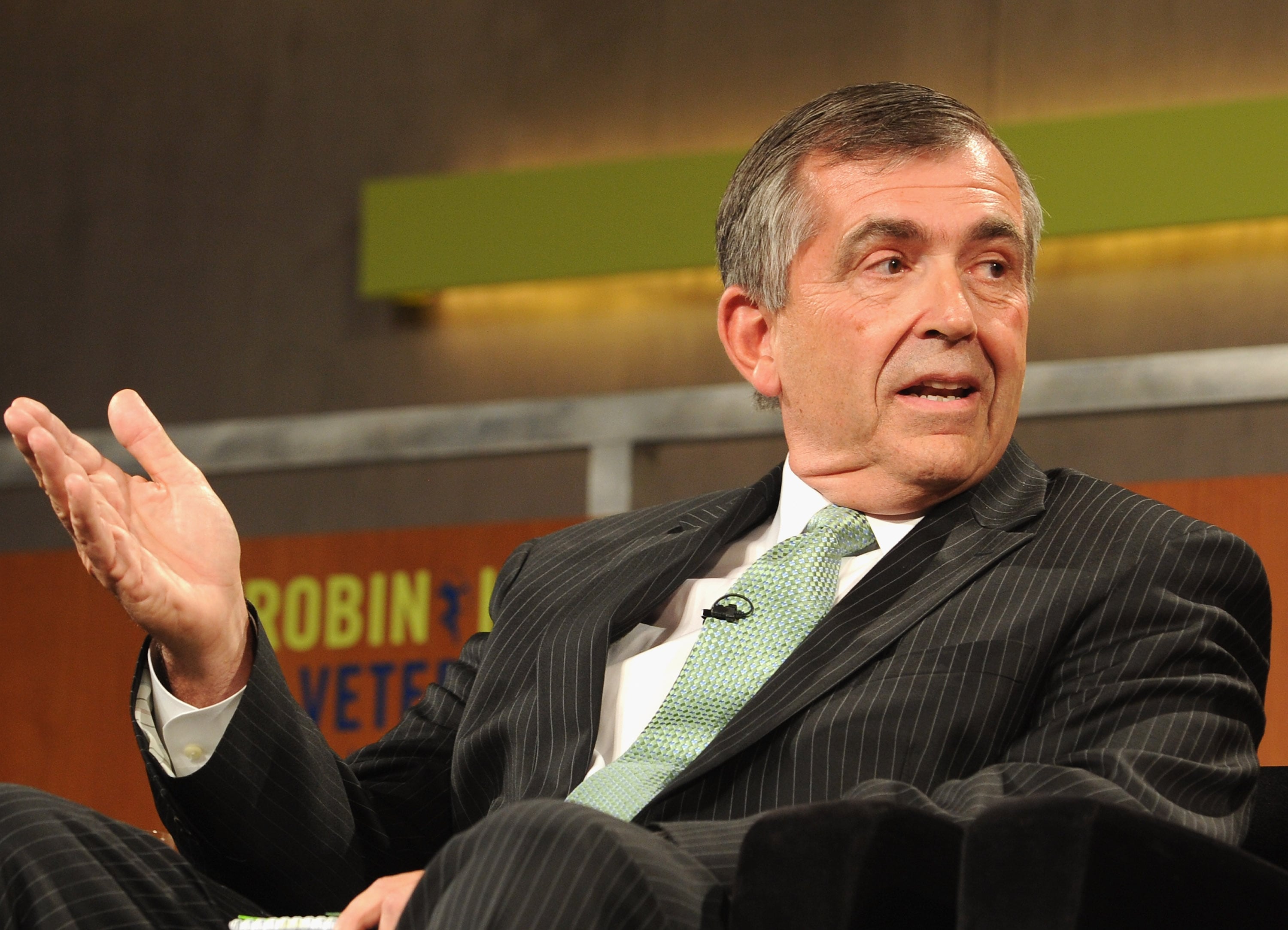
Some of the nation's top minds involved in brain injury research took a tongue-lashing Tuesday from retired Gen. Peter Chiarelli, a former Army vice chief of staff who, in his current position as head of a non-profit that promotes brain science, said the current research architecture hampers medical advancement.
Speaking to attendees at the Veterans Affairs Traumatic Brain Injury State of the Art Conference in Washington, D.C., Chiarelli said the system recognizes "individual accomplishments and does not recognize team science."
The end result is that the system fails patients, he said.
As a case in point, Chiarelli cited a genetic variant — APO E4 — that, if passed to a child from both parents, may decrease the child's ability to recover from a concussion.
First reported in 1997 in The Lancet, a top scientific journal, the variant has been mentioned several times in subsequent journals, and was well-known to a researcher who brought it to the attention of Chiarelli when he was serving as Army vice chief.
But his effort to find out more about the variant revealed very little information outside medical journals.
"This is a problem," he said. "It doesn't give me, as a grandfather, the information to tell my granddaughter or grandson, 'You probably would not want to be a linebacker for the Pittsburgh Steelers.' Or, as a commander, to know the risk factors for assigning someone as a bomb disposal technician."
The two-day conference brought together researchers from VA, the National Institutes of Health, government and academia to collaborate on issues relevant to traumatic brain injury. More than 30 researchers showed posters of their current work and panelists conferred for two days on subjects ranging from diagnostics and therapies for patients with TBI to caring for the injured, pain management and related diseases.
Moving through the poster session, however, Chiarelli said he was dismayed to hear one attendee say he was unaware that so much research was happening across the VA.
"We are not focused on the patient," Chiarelli said. "If we were, we would be handling these problems together."
As head of One Mind for Research, the retired general's mission is to promote "open science," the concept of making scientific research, results and data available to anyone.
Research institutions, which pour millions into their medical programs, tend to be protective of their scientists and findings, in the a belief that competition fosters medical advancements and breakthroughs.
Dr. Carolyn Clancy, VA's chief medical officer, acknowledged that researchers in her department are no different. But she said the work at the summit, convened in an effort to jump-start collaboration, along with Chiarelli's observations, present "an opportunity, particularly for the [Defense Department] and VA."
Clancy said VA research facilities could be centers of excellence for treating traumatic brain injury, "go-to" facilities for patients that would advance the science, similar to regional pediatric cancer centers that have changed the course of that disease for thousands of children.
"I don't see a reason why we can't actually bring that to bear here," Clancy said.
Since 2001, more than 327,000 troops have been diagnosed with mild, moderate and serious brain injuries, according to the Congressional Research Service. The number is likely higher, a Defense Department researcher said Monday, since service members often don't report mild concussions or exposure to blasts and other events that can damage the brain.
A 2008 RAND Corp. study estimated that up to that time, about 725,000 troops may have received a TBI or met the criteria for PTSD or combat-related depression.
The VA spent more than $36 million on research last year. Chiarelli said great work is being done in government and university laboratories, but work on traumatic brain injuries and brain diseases like Alzheimer's and Parkinson's could be advanced further and faster if the "silos" separating research could be removed.
"I'm not trying to be critical. I just see the power that people working together could accomplish," he said.
Patricia Kime is a senior writer covering military and veterans health care, medicine and personnel issues.