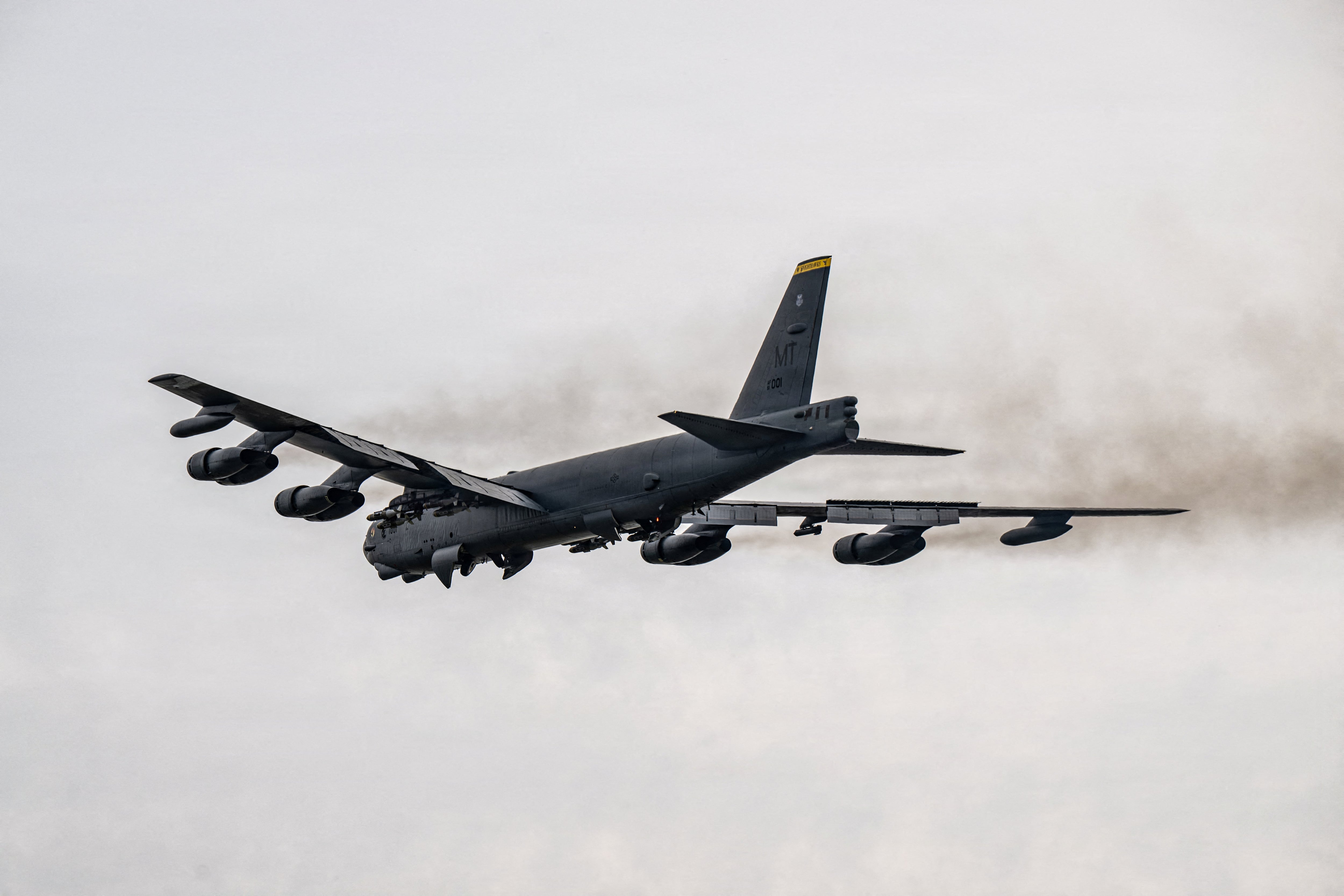
Most of the U.S. Air Force’s efforts to modernize its B-52s are experiencing significant challenges, a government watchdog said in a Friday report.
As the service projects to spend $21 billion in modernizations for 76 active long-range strategic bombers, the Government Accountability Office argues that advancing such efforts, such as new engines, with “little to no” developmental flight testing will increase the risk that the system will not function as desired.
The Boeing B-52 Stratofortress has been in service since 1955 and was originally given a life expectancy of 20 years. The Air Force now expects to utilize the aircraft, which can conduct conventional and nuclear bombing missions, through 2050.
“The scope of the cumulative B-52 modernization effort, combined with the inherent complexity associated with simultaneously executing multiple independent and concurrent programs, results in technical, programmatic, and operational challenges for the entire community tasked to develop, integrate, test, and field these upgrades,” the report says.
Ten of 13 modernization efforts are experiencing cost, schedule or performance challenges.
In particular, since 2023, the engine replacement, which is the largest and most expensive upgrade, faced a cost increase of around $3 billion and delayed operational capability by more than 15 months because the Air Force proceeded with the production plans with minimal developmental flight testing, the report reads.
The GAO said the service is also not consistently using digital engineering tools that provide real-time data that access overall performance for decision makers, causing the Air Force to potentially miss opportunities to for efficiencies that would help avoid future sustainment and supportability issues.
The current maintenance plans of bringing B-52s to a repair depot every four years does not account for possible schedule delays from the Commercial Engine Replacement Program, or CERP.
“B-52 maintenance is already struggling with finding sufficient parts for the current engines,” the report says. “Without planning for the possibility of engine delays from CERP, the Air Force risks falling behind on planned B-52 maintenance, which could impact readiness.”
The GAO made six recommendations to the Air Force to improve B-52 planning and management, including delaying the CERP production until the program office analyzes the associated risks, as well as updating sustainment plans and evaluating the benefits of using digital engineering.
Cristina Stassis is a reporter covering stories surrounding the defense industry, national security, military/veteran affairs and more. She previously worked as an editorial fellow for Defense News in 2024 where she assisted the newsroom in breaking news across Sightline Media Group.