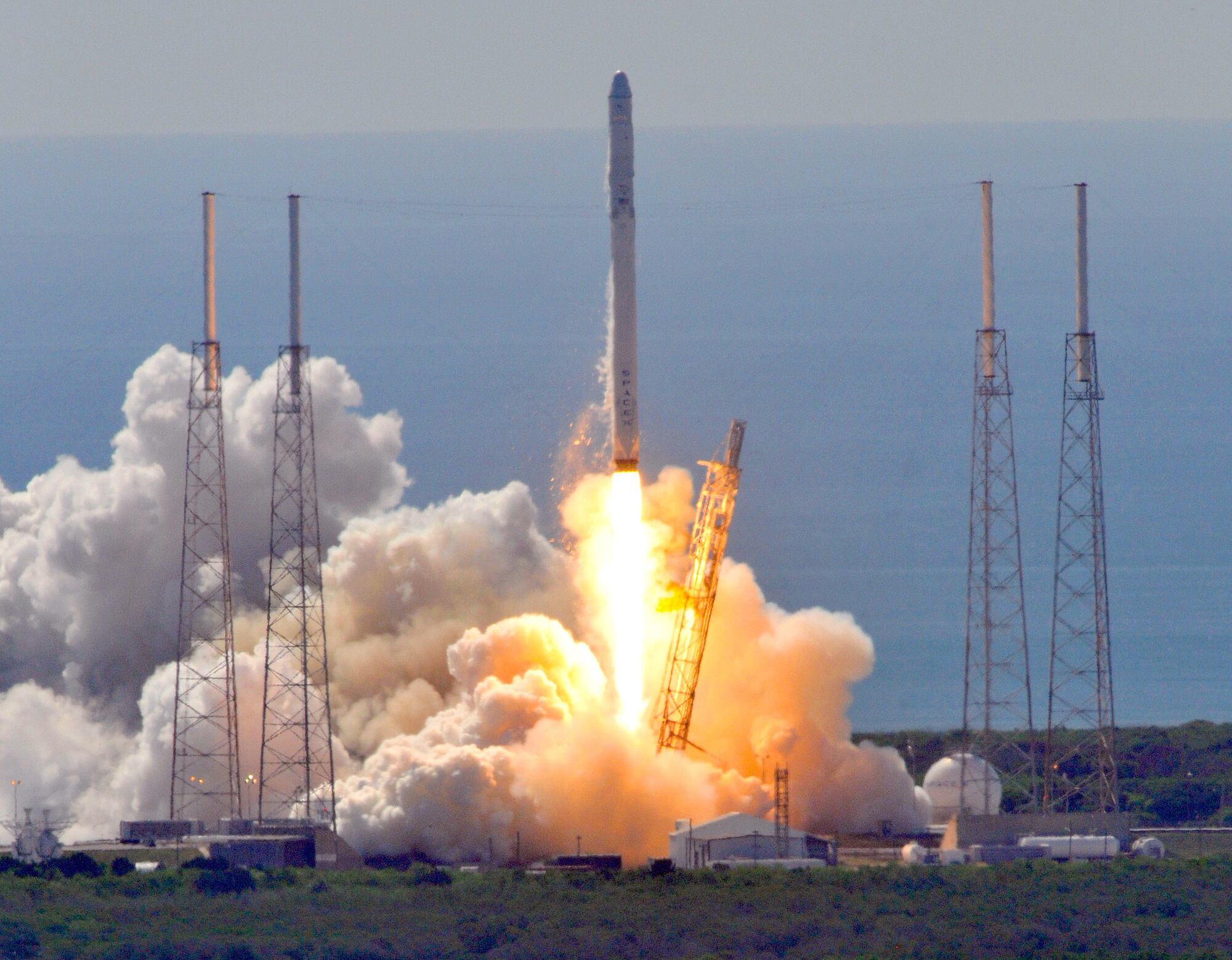
CAPE CANAVERAL — SpaceX launched a Falcon 9 rocket hauling 11 Orbcomm Inc. communications satellites Monday evening from Cape Canaveral Air Force Station and safely landed the first stage booster back on land, a first for the company.
The successful touchdown at 8:40 p.m. ET on legs within 10 minutes of liftoff was a breakthrough in Musk's vision to lower launch costs by recovering and reusing rockets. At SpaceX headquarters in Hawthorne, California, workers cheered and broke into chants of "USA, USA," after the successful landing.
"It's really a massive difference if we can make reusability work," Musk said last week.
The landing back in Florida of the 14-story booster — something SpaceX has long said it was preparing to do — follows two near misses earlier this year by booster stages trying to land on platforms down range in the Atlantic Ocean. Both stages hit their target but ultimately crashed.
And it comes about a month after Blue Origin, a company started by Amazon.com CEO Jeff Bezos, showed such landings are possible, at least with a much smaller rocket that launched a capsule on a suborbital spaceflight from Texas.
SpaceX's primary mission was to return the Falcon 9 to flight safely and deliver Orbcomm's 11 OG2 satellites to their proper orbits about 500 miles up. That mission was accomplished Monday evening.
SpaceX started the year strong, launching its sixth Falcon 9 in as many months on June 28.
But just over two minutes into that flight of International Space Station cargo, a strut snapped in the Falcon 9's upper stage. The liquid oxygen tank ruptured, causing the entire rocket to lose control and break apart.
"It's quite emotionally traumatic, actually," Musk said last week of the experience. "Rockets are hard."
SpaceX has a backlog of satellite customers awaiting rides. NASA is counting on the Falcon 9 and Dragon to fly cargo to and from the station, and within about two years to start flying astronauts.