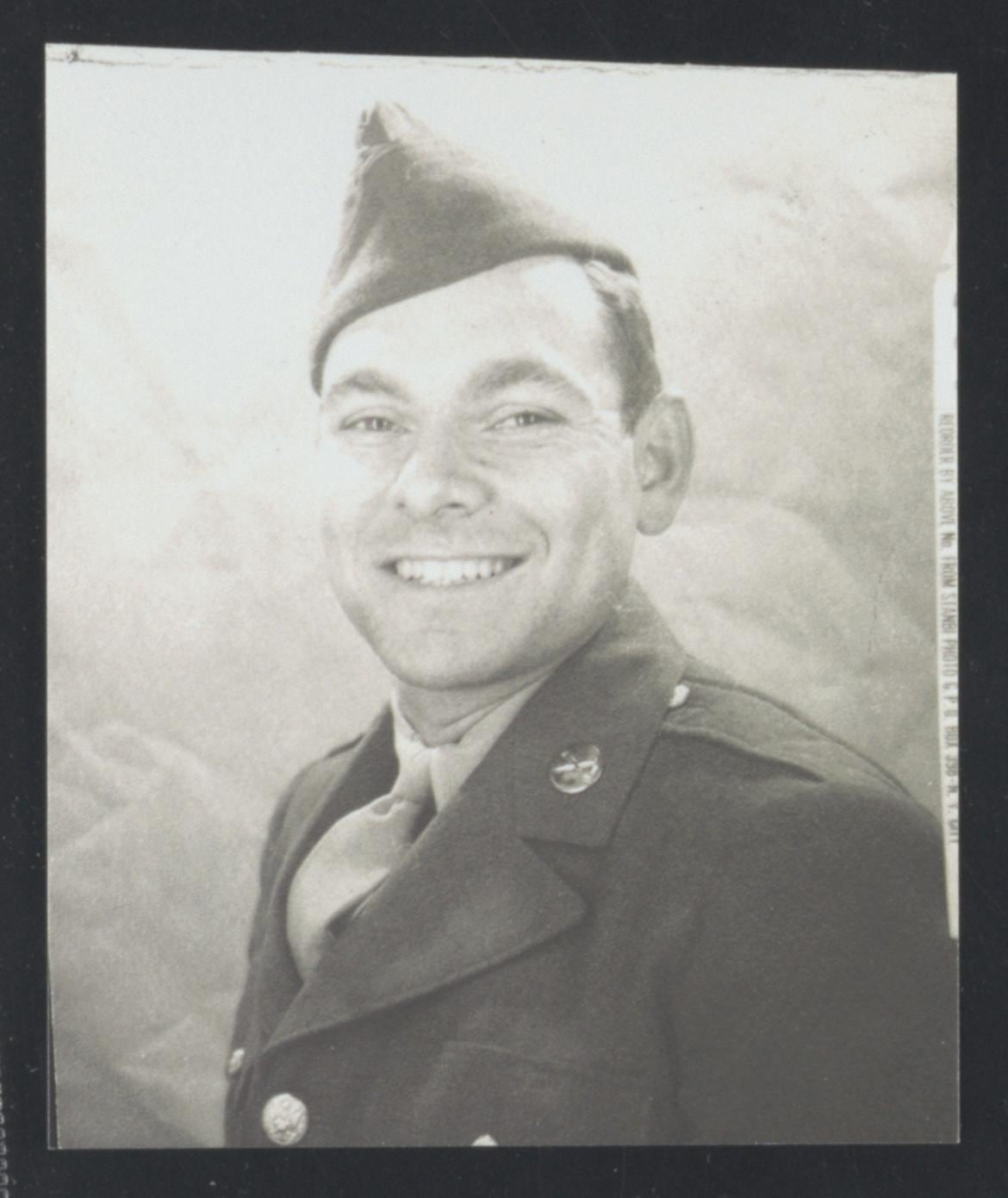
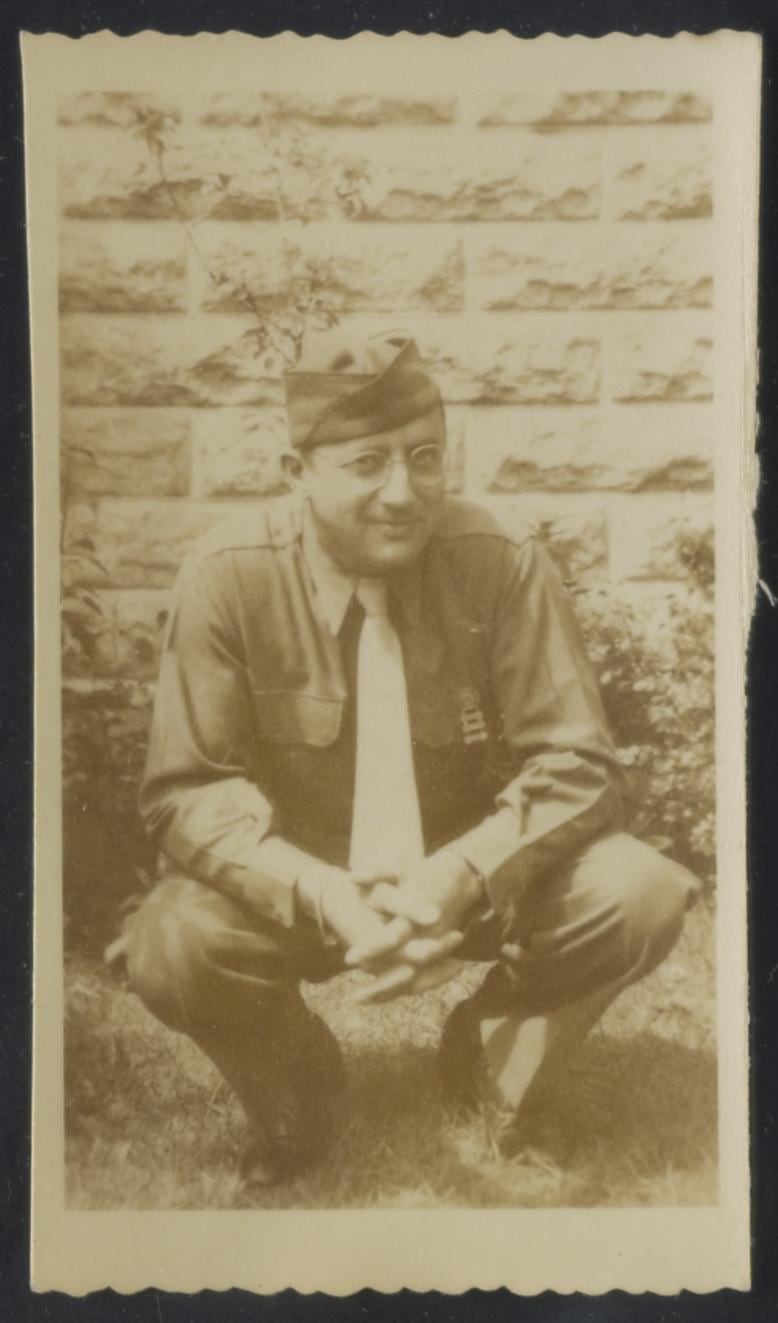
On June 12, 1944, Joseph “Jerry” Brenner was training at Camp Forest in Tennessee, preparing to deploy to Europe with the U.S. Army’s 740th Field Artillery Battery and the rest of the Third Army as part of the “Great Crusade” to end the tyranny of Nazi Germany. Like most GIs, he was lonely and missed his family: wife Norma and baby Laurie back in Brooklyn, New York.
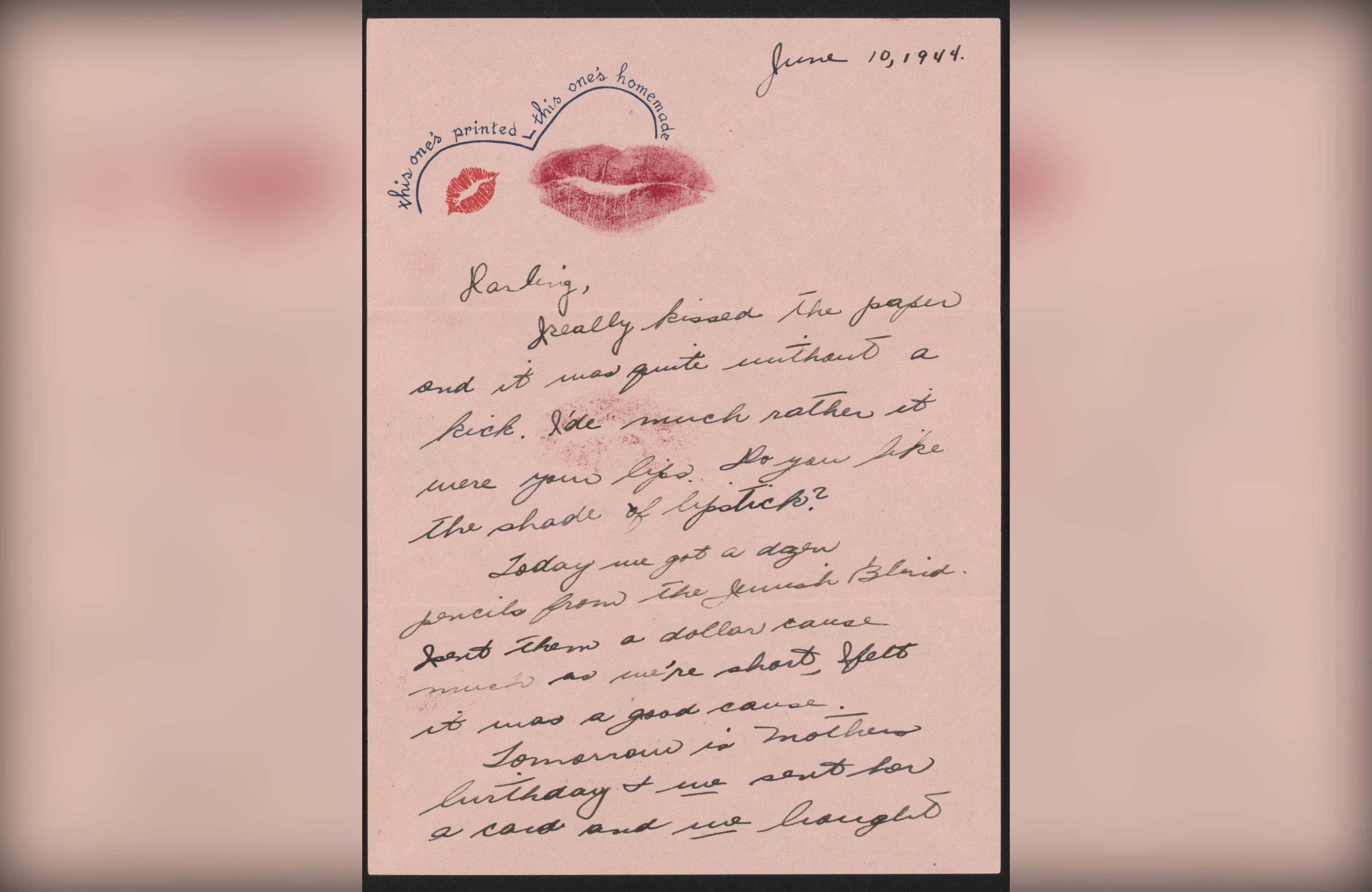
The corporal’s day brightened considerably at mail call when he received several letters from home. One dated June 10 was from Norma. Along with details about his 3-month-old daughter, the letter included a tender expression of love from his wife: the bright-red lipstick smudge of a kiss. Underneath it, she penned the words, “Darling, I really kissed the paper and it was quite without a kick. I’d much rather it were your lips.”
Brenner wrote back later that day: “I just kissed your lips. It was almost as good.”
For as long as the United States has been going to war, love letters have comforted soldiers, sailors, airmen and Marines serving on the front lines. These passionate, purposeful messages serve as reminders of why they shipped off to a foreign land to face the horrors of combat: to protect and defend their loved ones.
The Library of Congress includes tens of thousands of love letters in its massive Veterans History Project collection in Washington. For Valentine’s Day, Military Times delved into some of these missives and their impact on maintaining morale and spirit among troops in World War II.
“Jerry and Norma Brenner exchanged some 1,200 letters,” said Travis Bickford, the project’s head of communications and an Army veteran. “They were prolific. They wrote each other every day, sometimes twice a day. It’s a topic that really touches home. You realize just how much communication back home matters. It’s not just fundamental. It’s literally necessary.”
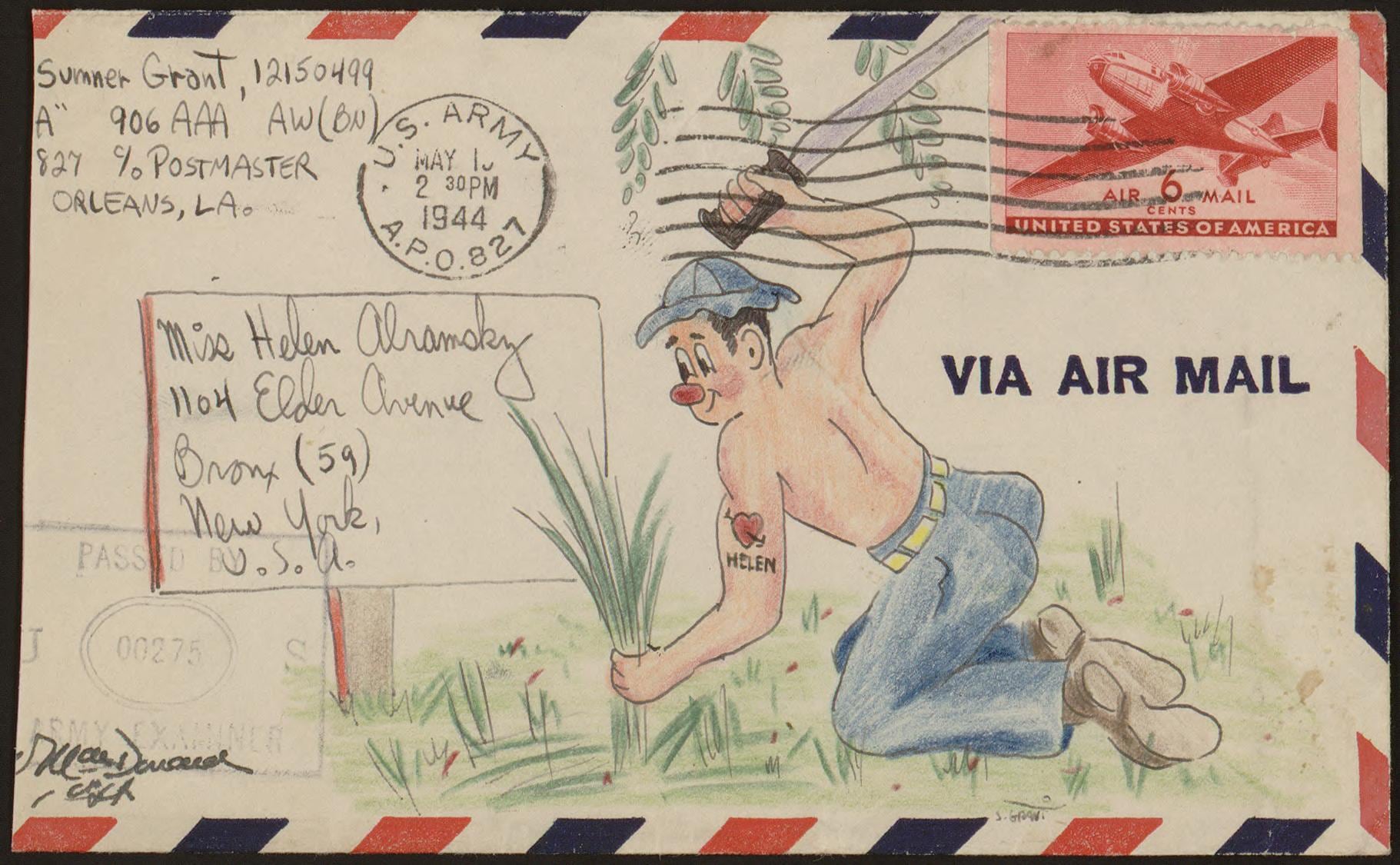
In 1944, Pfc. Sumner Grant was thousands of miles away from his fiancée, Helen Abramsky, in the Bronx, New York. Guarding the Panama Canal, he served in Battery A of the 906th Anti-Aircraft Artillery Battalion with the Panama Coast Artillery Command. The former architecture and design student expressed his love by painting watercolor illustrations of his military activities and other scenes on the envelopes of his letters home.
The Sumner Grant collection in the Veterans History Project includes nearly 150 envelopes featuring the colorful and amusing depictions of life in the U.S. Army. All show exaggerated examples of Army life in humorous detail with a brief printed description, such as “This is the Army,” “Dreaming of furlough” and “You are always in my heart.” Following his death in 2000, Helen donated the collection to the Library of Congress in memory of her husband, whom she married in 1945.
“People can go online and view these individual resources of Sumner Grant,” said project director Monica Mohindra. “You can see how exactly he tried to bridge that physical gap. Veterans have told us that being able to communicate in these ways gave them a sense of connectivity. It wasn’t just something for the person receiving it — it meant a lot to them.”
Serving in the military was probably the last thing Ralph Samuel Jaffe expected in 1944. The owner of a hardware store in Newport, Rhode Island, was 37 and balding with arthritic knees — plus he had a wife, Betty, and two teenagers, Rita and Stanley. Then he received his draft notice.
Jaffe trudged off to war, enduring the grueling trials of physical training at Fort Bragg in North Carolina and then serving as a mail clerk in Manila a few months after the Philippine city was liberated by Allied forces in 1945. He and his wife exchanged nearly 600 letters. Pfc. Jaffe complained about struggling to keep up with 18-year-old draftees, who were more interested in “liquor & women.”
“I must be a writing fool,” he penned in one letter home to his wife. “All the boys are shooting dice and playing poker … while I sit and write all day long. … I save you for the last — because you’re in most of my heart.”
Betty, who took over running the hardware store, asked about ordering supplies and telling him how she longed to be seen with him in uniform.
“You see, I’m so proud of you. I want to show you off,” she wrote on the distinctive letterhead of Jaffe’s shop in Newport.
The Veterans History Project collects, preserves and makes accessible the firsthand recollections of individuals who served from World War I through recent conflicts and peacekeeping missions. To date, it has gathered more than 121,000 stories and oral histories, offering personal perspectives on what it means to serve in the U.S. military.
“One of the things that makes the Veterans History Project so compelling is that these are the personal expressions of real people,” Mohindra said. “Each of these individuals is sharing the plight of their extremely personal experience, thinking about their loved ones. To me, the real power comes from the notion that these are very unique individual experiences that one by one become a collective chorus of what is universal feeling of longing.”
Few of the correspondence in the collection stand out like Norma’s lipstick-smudged letter. The pair of red lips are unusual today because the military banned the use of lipstick — known as the “Scarlet Scourge” — on letters sent via Victory Mail during World War II. The waxes and oils in the cosmetic jammed equipment used to convert letters into microfilm for ease of shipping mail overseas to the troops.
The visual impact of the red lips are striking — not just for the image, but for what it represents: the pain of a long separation over thousands of miles brought on by a deadly conflict that could result in the tragic end of the relationship. Reading through the letters, there is a sense of foreboding, longing and loneliness, but also of hope and promise for a better tomorrow.
In one of his letters home, Jerry Brenner wrote about the emotions probably felt by every person in the military longing to return to his or her loved ones:
“I do know that your love is strong. All I can say to you is that we are one. One in body and soul. Until we are together again we cannot live. Love always, Jerry.”