The Pentagon has reached an agreement with BAE Systems and Lockheed Martin to quadruple production of infrared seekers for the Terminal High Altitude Area Defense interceptor, officials announced Wednesday.
The seeker deal aligns with a contract agreement in January between the Pentagon and Lockheed to quadruple the company’s annual production of THAAD interceptors from 96 to 400.
“This new multiyear agreement provides a long-term demand signal that gives us the confidence to further invest in expanding our capacity,” Tom Arseneault, president and CEO of BAE Systems, said in a release Wednesday. “We remain focused on rapidly delivering superior technology at scale to help our warfighters maintain a decisive advantage.”
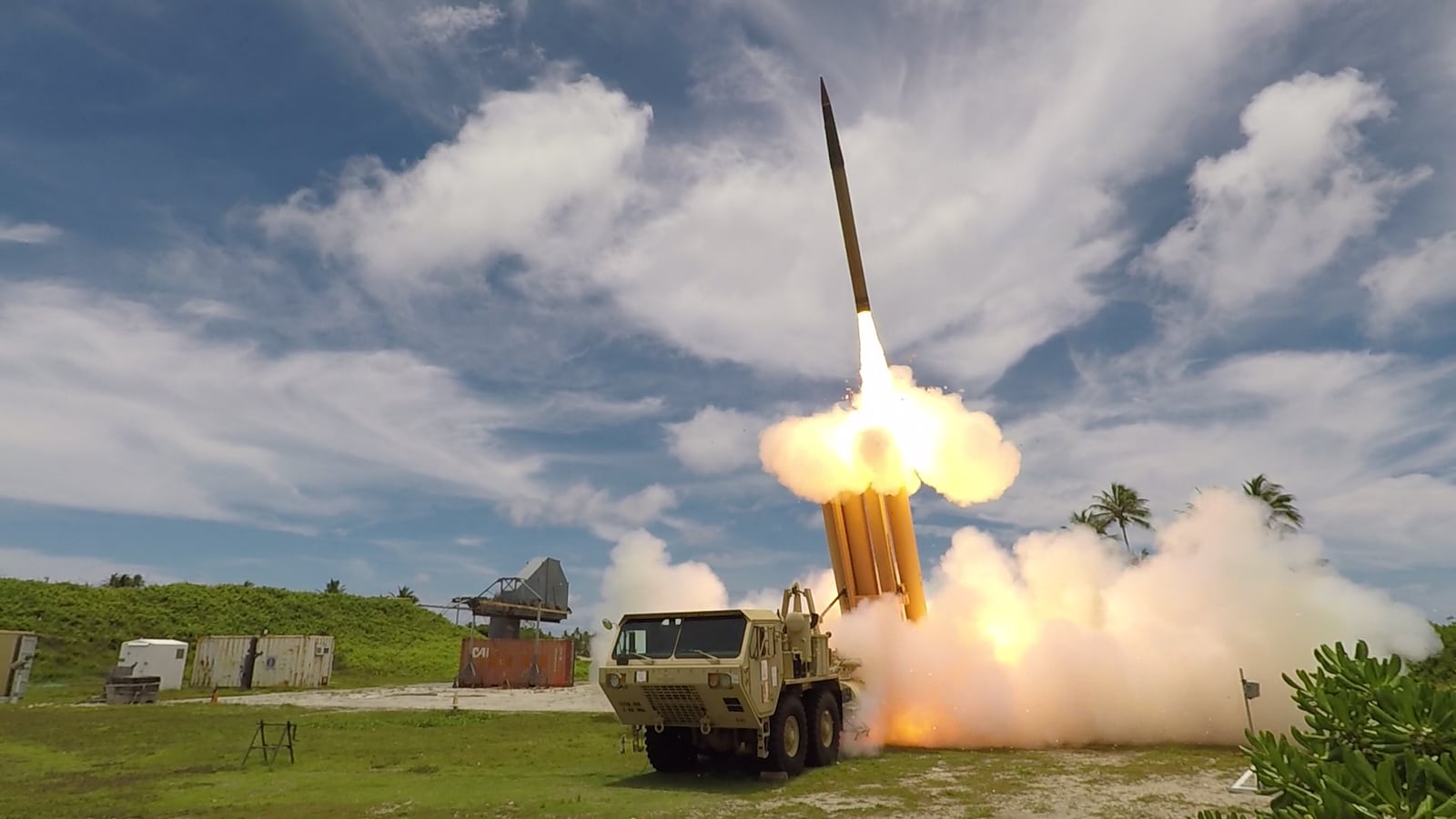
BAE’s THAAD seeker uses advanced sensors to find and lock onto incoming threats, including ballistic missiles traveling up to 17,000 miles per hour, according to company specifications.
Once locked on, the THAAD interceptor can take out threats both inside and beyond the atmosphere using a non-explosive, hit-to-kill impact.
Like Lockheed’s deal, the contract for BAE’s infrared seekers is set for seven years. Lockheed also announced a separate seven-year deal in January to increase annual production of its PAC-3 interceptors from 600 to 2,000 across the next seven years.
The deals come as the U.S. military’s reliance on costly interceptors against cheap munitions, particularly those used by Iran during Operation Epic Fury, has come under increased scrutiny.
Iran has no shortage of unmanned Shahed drones — reportedly producing 10,000 per month, according to Reuters. Contrast the $35,000 average cost of an Iranian Shahed drone with an estimated $4 million price tag of a PAC-3, and the cost exchange is 114-1 in favor of Iran.
But with deals in place to quadruple THAAD production, it’s clear the Pentagon views the systems as vital pieces in the defense architecture.
“Securing our supply chain is just as critical as our partnership with the prime contractors,” Michael Duffey, under secretary of defense for Acquisition and Sustainment, said Wednesday. “This agreement with BAE Systems sends a clear, stable, long-term demand signal. We are providing the certainty our partners need to invest, expand and hire. This is how we place the industrial base on a wartime footing.”
BAE Systems’ work on the THAAD seeker will be completed at the company’s facilities in Nashua, New Hampshire, and Endicott, New York.
J.D. Simkins is Editor-in-Chief of Military Times and Defense News, and a Marine Corps veteran of the Iraq War.