The Pentagon declared on Friday that the U.S. military’s top priority is to defend the homeland and Western Hemisphere, a shift supplanting its longstanding goal of countering China.
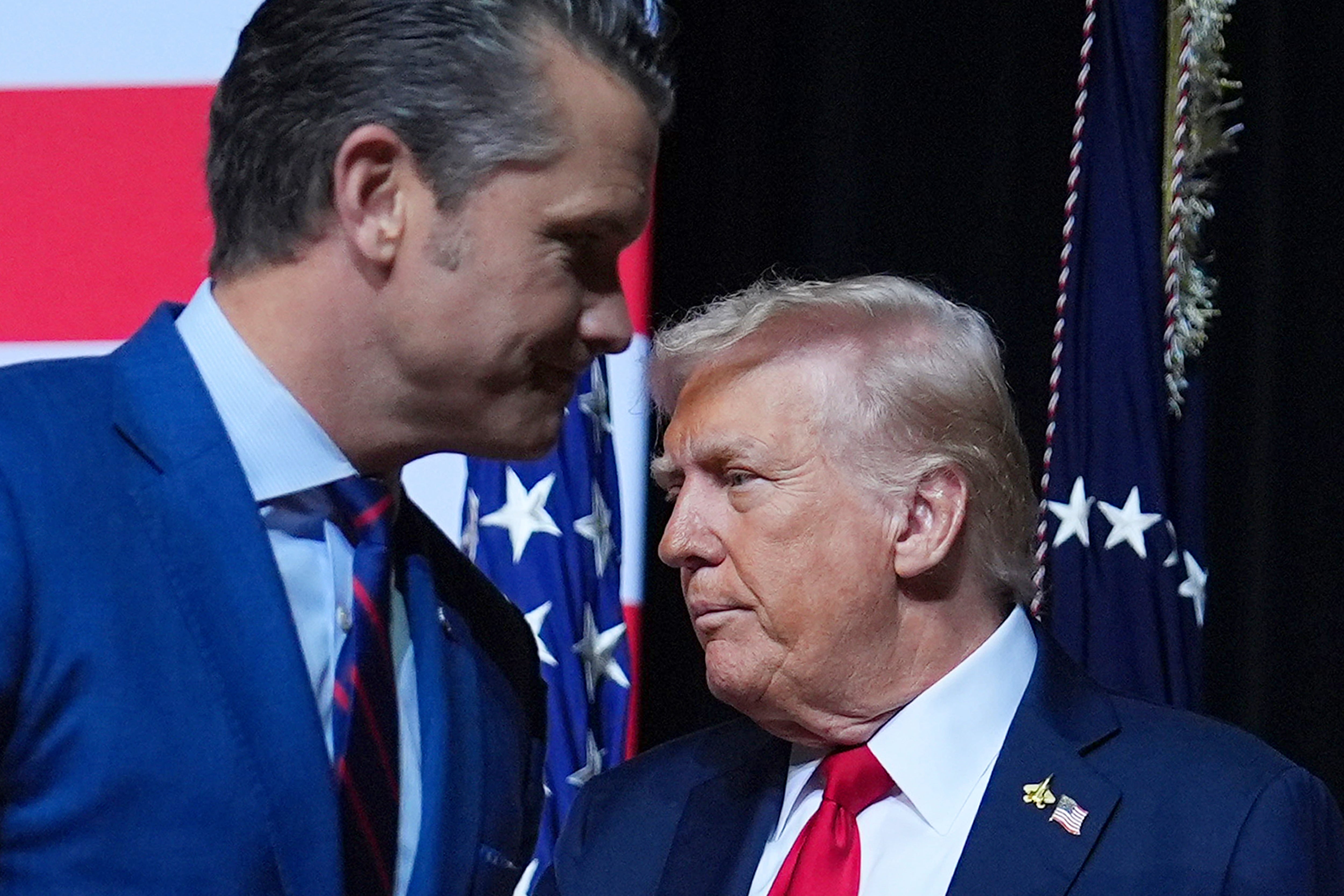
The 2026 National Defense Strategy — a quadrennial report — described the change as a sharp alteration “in approach, focus, and tone.” Secretary of Defense Pete Hegseth, in a pointed critique of past policy, wrote the U.S. government had previously “neglected – even rejected – putting Americans and their concrete interests first."
“No longer will the Department be distracted by interventionism, endless wars, regime change, and nation building,” he added.
The 34-page blueprint asserts the “Trump Corollary to the Monroe Doctrine” encompasses a commitment to restoring American military dominance in the Western Hemisphere. It also prioritizes access to strategic locations such as Greenland, the Panama Canal and the Gulf of Mexico. President Donald Trump has framed this approach as the “Donroe Doctrine,” a modern iteration of Monroe’s principle that European powers should not intervene in the Western Hemisphere.
“America’s military stands ready to enforce it,” the Pentagon report said.
China ranks as the Trump administration’s second priority — a contrast from both the president’s first term and from his predecessor, Joe Biden, who regarded Beijing as Washington’s principal adversary.
The Pentagon said it aims to be “clear-eyed and realistic about the speed, scale, and quality” of China’s historic military buildup, but the goal is neither to “dominate,” nor to “strangle or humiliate them.”
Instead, the strategy underscores ongoing U.S. diplomacy with China in tandem with “erecting a strong denial defense” in the Pacific. The U.S., according to the strategy, will “urge and enable key regional allies and partners to do more for our collective defense.”
Taiwan is notably absent from the national security focus, even as Chinese leader Xi Jinping has ordered his armed forces to be ready to seize the island by 2027.
The strategy also identifies Russia as a key security concern, characterizing it as a “persistent but manageable threat” for the foreseeable future.
“Fortunately, our NATO allies are substantially more powerful than Russia — it is not even close,” the report notes. “Germany’s economy alone dwarfs that of Russia.”
While the U.S. says it will continue to play a vital role in NATO, the strategy contends that Washington’s allies are well positioned to take “primary responsibility” for Europe’s conventional defense with “critical but more limited U.S. support.” This includes taking the lead in support Ukraine’s defense, as Moscow’s invasion of its neighbor approaches its fifth year.
Tanya Noury is a reporter for Military Times and Defense News, with coverage focusing on the White House and Pentagon.