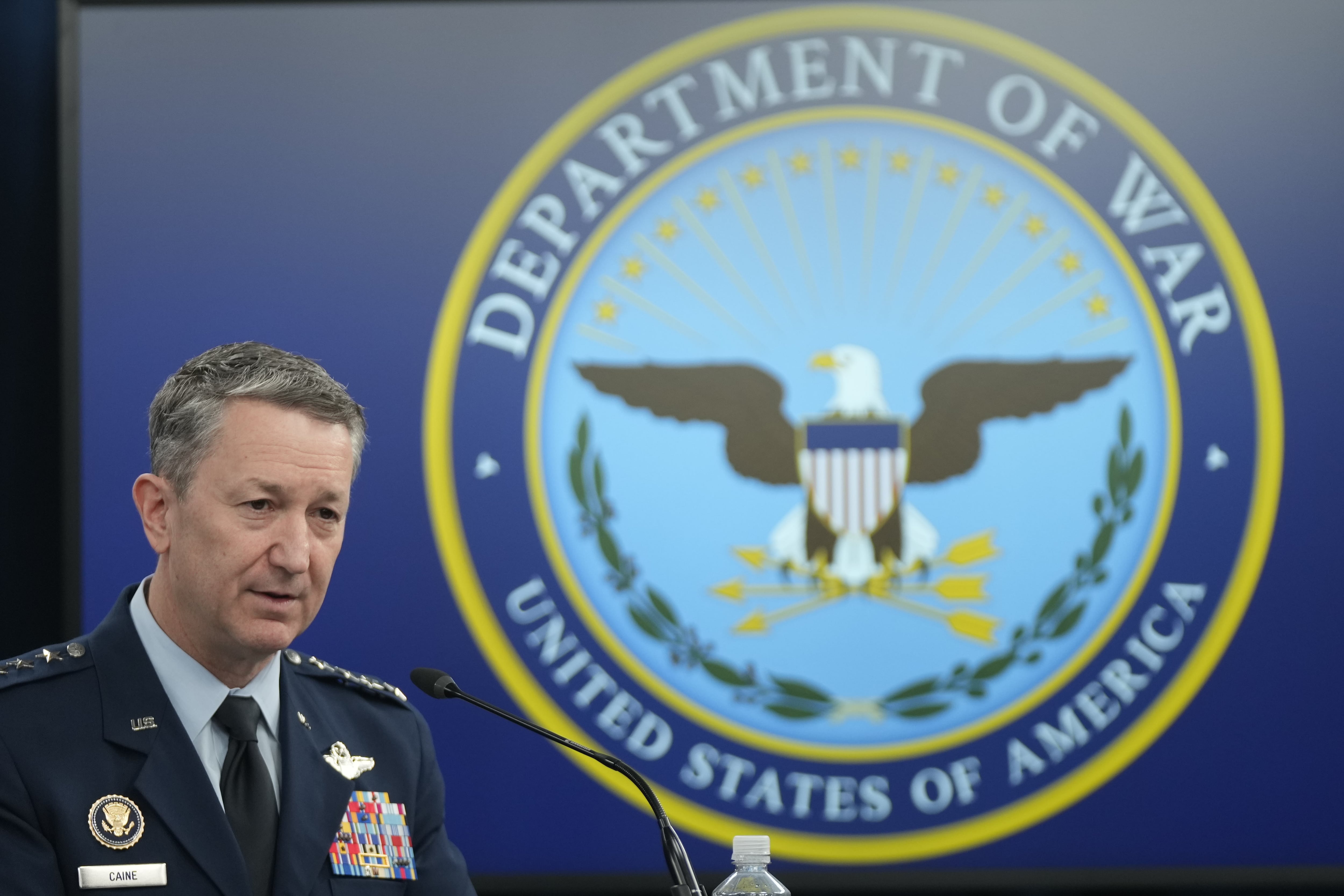
Chairman of the Joint Chiefs of Staff Gen. Dan Caine announced that additional military personnel were on their way to Iran hours after the U.S. military announced a fourth service member had died during combat operations there.
Speaking to reporters at a Pentagon media briefing Monday in Washington, Caine, alongside Defense Secretary Pete Hegseth, provided details and updates regarding Operation Epic Fury, the U.S. military campaign launched on Feb. 28 that targeted Iranian missile sites and air defense sites, among other targets.
“This is not a single, overnight operation,” Caine said. “We expect to take additional losses.”
Four service members have been killed in action so far, U.S. Central Command officials announced Monday.
During his remarks, Caine expressed his condolences to the families of the troops who died during combat.
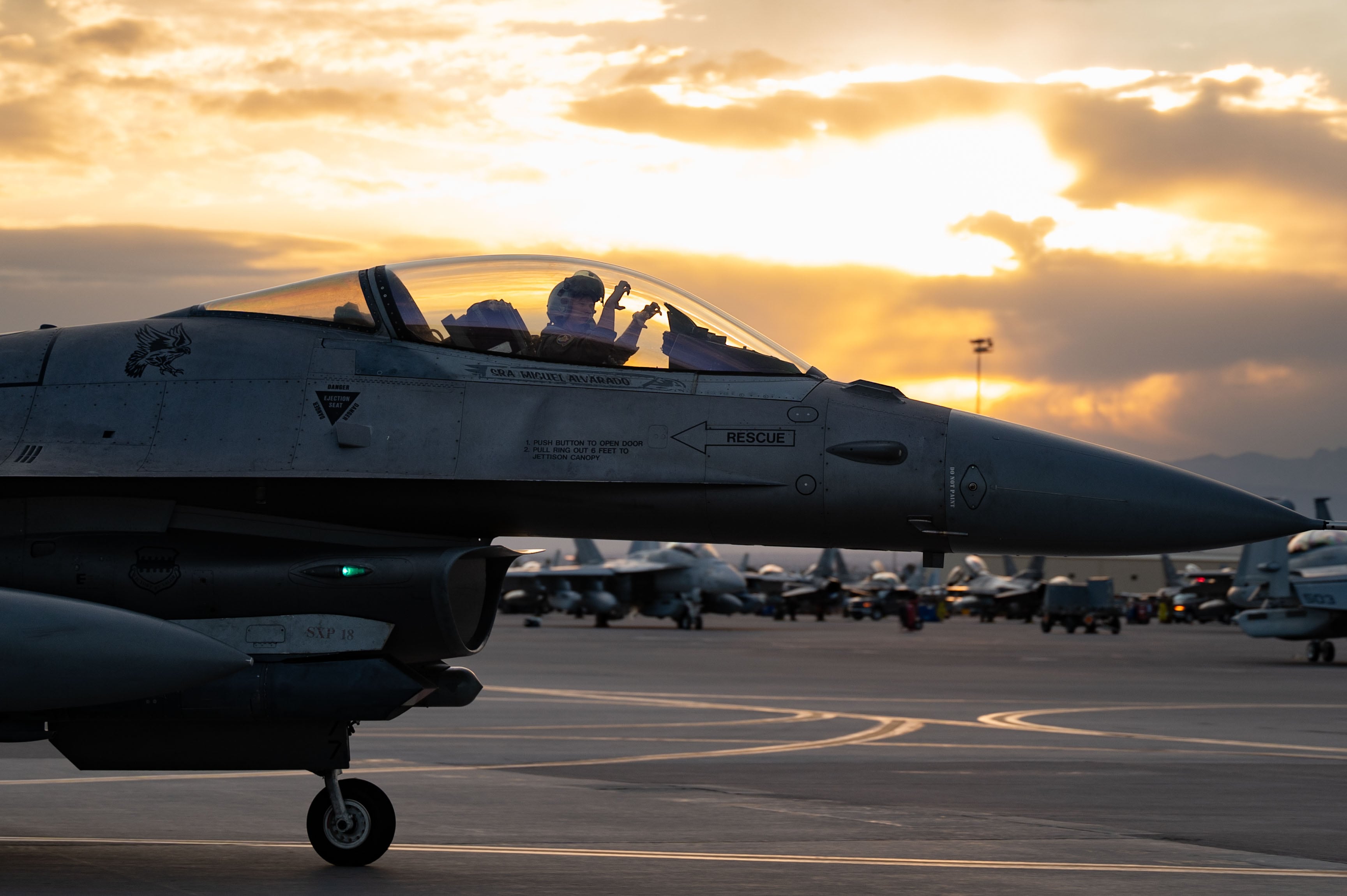
The Joints Chief of Staff did not relay the specifics of how many additional troops were on their way, but said that there was more tactical aviation flowing into theatre.
However, according to Caine, the military was close to where it wanted to be for total combat capacity and combat power for Navy Adm. Brad Cooper, commander of CENTCOM.
RELATED

Cooper will continue to consistently assess the trajectory of the military campaign, deciding whether it is on or off that line, Caine said.
The Joint Force would then develop options for consideration by the defense secretary and the president that would increase or decrease the amount of combat capability.
“It won’t happen overnight,” Hegseth said. “This is a big battle space with a lot of capabilities, that’s part of the reason why it’s such a threat to us.”
The U.S. is aggressively pushing into Iranian airspace to destroy anything attempting to target the U.S., according to the defense secretary.
“Think of it as shooting the archer instead of the arrows,” Hegesth said.
Within the first 24 hours of Operation Epic Fury, the U.S. struck more than 1,000 targets, with Hegseth reiterating this morning that the overall objective is to protect and defend the U.S. and prevent Iran from being able to project power outside its borders.
Three U.S. F-15E Strike Eagle jets also went down after an incident of friendly fire involving Kuwait air defenses, CENTCOM said.
The six aircrew on board the jets ejected safely.
“This is not a so-called regime change war, but the regime sure did change,” Hegseth said during his remarks.
The U.S. and Israeli military have killed 555 people in Iran so far, according to a Monday statement from the Iranian Red Crescent Society.
“To those who would test our resolve, or threaten the United States, our allies or our interests — understand clearly, we can reach you, we can sustain the fight, and we can scale the fight and we will prevail,” Caine said.
Riley Ceder is a reporter at Military Times, where he covers breaking news, criminal justice, investigations, and cyber. He previously worked as an investigative practicum student at The Washington Post, where he contributed to the Abused by the Badge investigation.