KYIV, Ukraine — Ukraine has launched Mission Control, a first-of-its-kind digital command-and-control system designed to unify planning, execution and reporting for all drone operations across the country, as Kyiv seeks more innovative ways to move the frozen front line on the battlefield after almost four years of Russia’s full-scale invasion.
The new system sits inside DELTA, Ukraine’s battlefield management ecosystem — an operational platform that already connects sensors and shooters across air, land, maritime, cyber, and space domains.
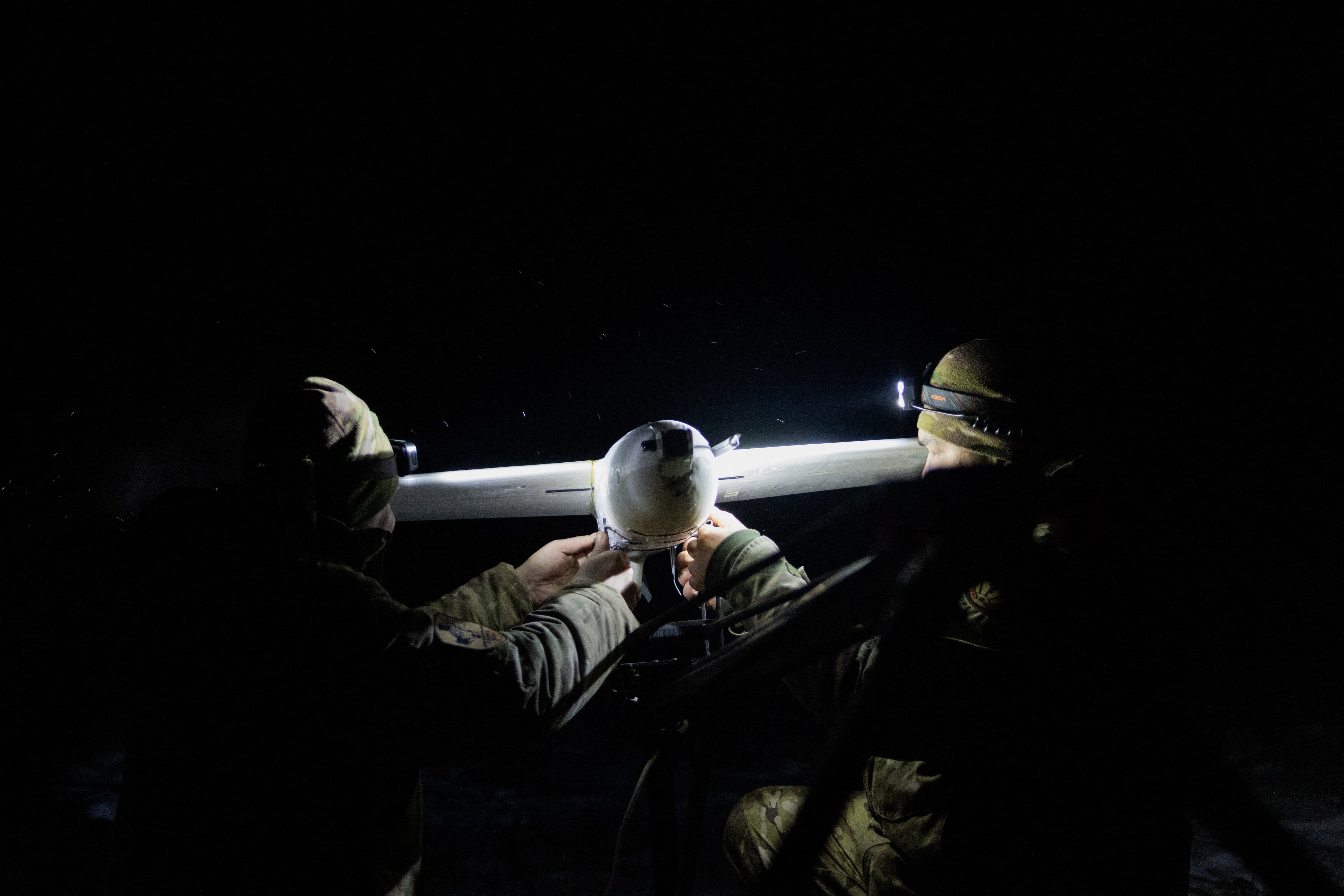
Ukrainian drone crews enter operational data into the system, including drone type, launch location, flight route, and mission task, which generates reports on real battlefield activity, according to officials. The process is meant to eliminate paper reports, facilitating an immediate analysis of battlefield conditions and strike effectiveness.
Mission Control represents Kyiv’s latest push to turn improvised war-fighting into a standardized, data-driven operation, echoing the sensor-to-shooter integration Western militaries have sought for decades.
The rollout comes as Ukraine positions its wartime data trove as leverage in peace negotiations — and as a touchpoint for deeper integration with allies.
“We will create a system that allows them to develop their software solutions utilizing our data,” Defense Minister Mykhailo Fedorov told reporters days before launching Mission Control, per Reuters. “Currently, data from the front lines holds immense value.”
Although Fedorov announced the system’s kickoff just last month, officials have been working on the concept for years as a means to level the playing field against Russia’s military numerical overmatch, Ukraine, Deputy Defense Minister Lt. Col. Yuriy Myronenko told Military Times last week.
“We are a very different country from our enemy,” Myronenko said. “They have a lot of resources, people, money, and a lot of Soviet units, storage, ammunition, and a lot of things.”
Myronenko served as a combat commander fighting with drones in Ukraine’s southern front in 2023, then led the DELTA development group, then oversaw national cyber defense and drone procurement before moving to his current post.
RELATED
His view, and his recent appointment as deputy minister after serving previously in the Ministry of Digital Transformation alongside Federov, reflects the ministry’s broader bet that technology and speed are the country’s top assets for offsetting Russia’s advantages in manpower and materiel.
“We have good software, and we like technology, we like markets,” he said. “This is the only chance to win for us. There is no other chance.”
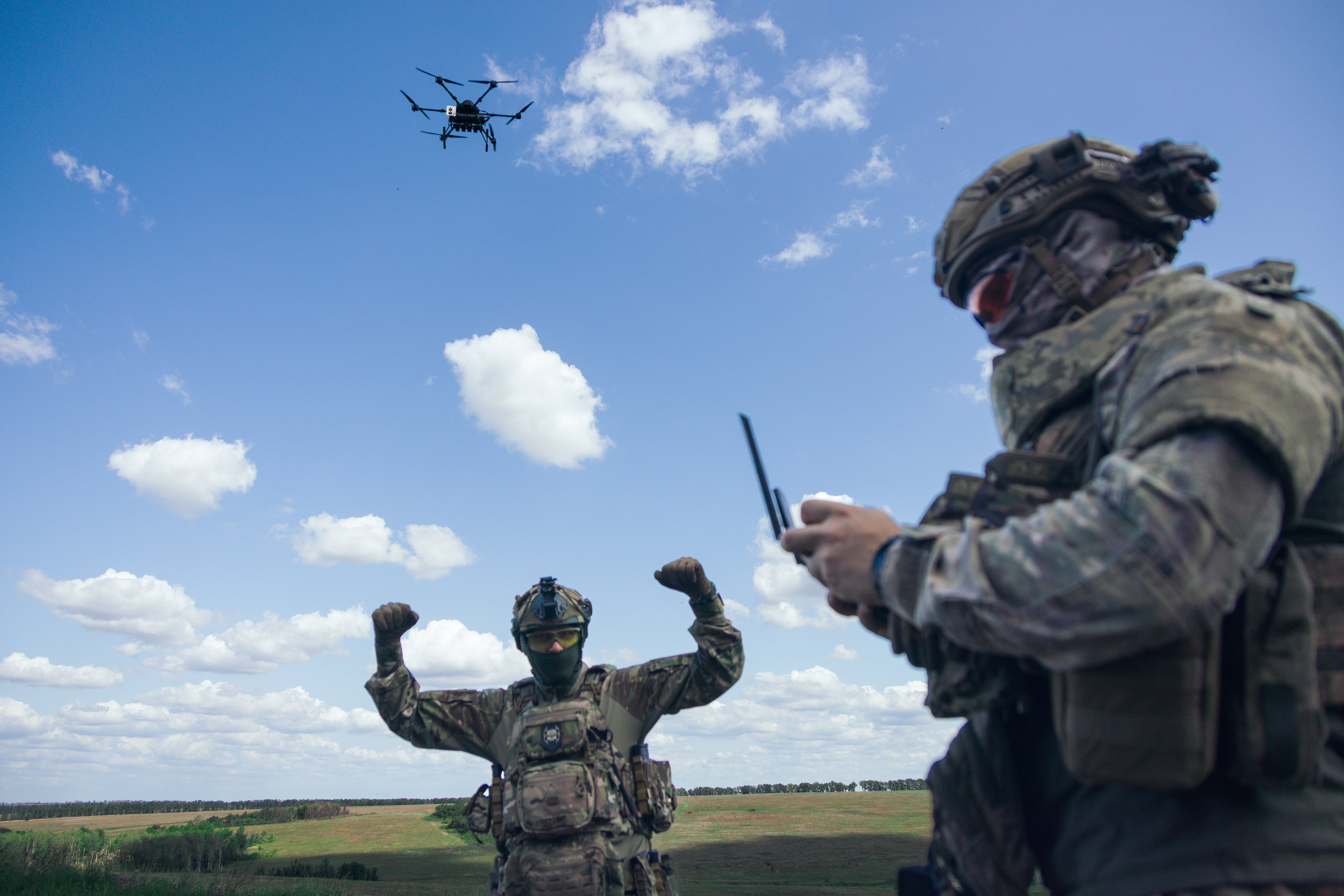
Ukraine now produces or procures more than 5 million drones annually, Myronenko confirmed to Military Times, including both “kamikaze, one-time-use drones” and fixed-wing drones reaching beyond 1,000 kilometers.
Mission Control is designed to manage this arsenal across a front line stretching hundreds of kilometers.
The advantage, Myronenko said, is not the technology itself — it’s how fast Ukraine can identify what works and scale it before the enemy adapts. “If we receive technology, the enemy will receive it as well,” he said. “Speed is key.”
Mission Control feeds directly into Ukraine’s performance-based “gamification” model, where drone units earn points for verified kills and top performers get priority access to new equipment. The connection is automatic: data entered into Mission Control flows into the ePoints ranking system without requiring separate reporting, Myronenko said.
“It is important for us to have a complete picture — with results and accumulated experience.”
Mission Control is designed to give commanders real-time visibility into what’s working and what’s not.
“Some units use drones very efficiently, some of them don’t, some of them have good management, some of them don’t,” Myronenko said. “We need to understand what is happening on the battlefield.”
The centralized system resolves that problem: “Commanders can see the whole picture. They can see what is working. They can see what is not working. They can see which crews are effective. They can see which drones are effective. They can see which tactics are effective,” he said. “And after that, they can scale it.”
The initiative also captures failure data for the first time. Before Mission Control, Ukraine could track confirmed kills, but not misses.
“We received all kinds of information about successful killing, but we didn’t have information about failures,” Myronenko said.
That means commanders can now calculate actual effectiveness rates, cost-per-kill, and identify underperforming systems — not just count hits.
“We are moving from chaos and fragmented data to managed, technological warfare, where decisions are made based on precise figures, not assumptions,” Fedorov said at the system’s launch. “This is the new logic of war.”
Myronenko — who previously led Ukraine’s State Service of Special Communication, the agency responsible for national cyber defense — said officials are creating the system with the highest levels of cybersecurity protection available, including those upheld by NATO partners.
“The security system itself is checked constantly,” Myronenko told Military Times, noting that Mission Control had already passed key cybersecurity standards put forth by the US National Institute of Standards and Technology (NIST).
“It is so complex that it is checked by the Big Four every year,” he added, referring to the four largest cybersecurity consulting firms globally.
“And the security systems are completely located in the national protected network,” he said. “No one except the Ministry of Defense has access to it,” he said.
Access is distributed on a least-privilege basis. Brigade commanders see brigade-level data. Corps commanders see corps-level data.
If a device is lost or captured — “and this happens quite often in the war” — the system limits exposure. “There is no access to the system itself. Only to the data that the pilot had,” he said.
Asked whether centralizing all operational drone data in one system creates a risk that outweighs the benefit, Myronenko pushed back.
“The biggest risk is that when almost a million people are fighting, and we don’t understand how they fight – which ways work, which don’t work, which are effective, which are ineffective,” he said. “This is the biggest risk when you don’t control the situation.”
“Even if we imagine that the enemy will see which drones we kill, which of them are effective — well, it’s probably very bad,” he acknowledged. “But without data, we will not be able to do anything.”
Myronenko drew a clear line on what gets shared with international partners, too.
Raw operational data from Mission Control — the real-time feed of who’s flying what, where, and with what results — “it’s operative information, and we never share it with anyone,” he told Military Times. But analytics — trend data, effectiveness patterns, month-over-month changes — “of course, can be shared with our close partners.”
He declined to name specific countries currently involved in the system’s development, but said that allies had already been part of the system’s development process.
The next target for centralization under Ukraine’s MoD: artillery data.
“Because it’s the same logic,” Myronenko said. “We need to have the data. We need to have the complete picture. We need to speed up decision-making.”
These developments are key to strengthening the defensive capabilities of Ukraine and its allies, according to the deputy minister.
“We need to innovate faster than our enemy,” Myronenko said.