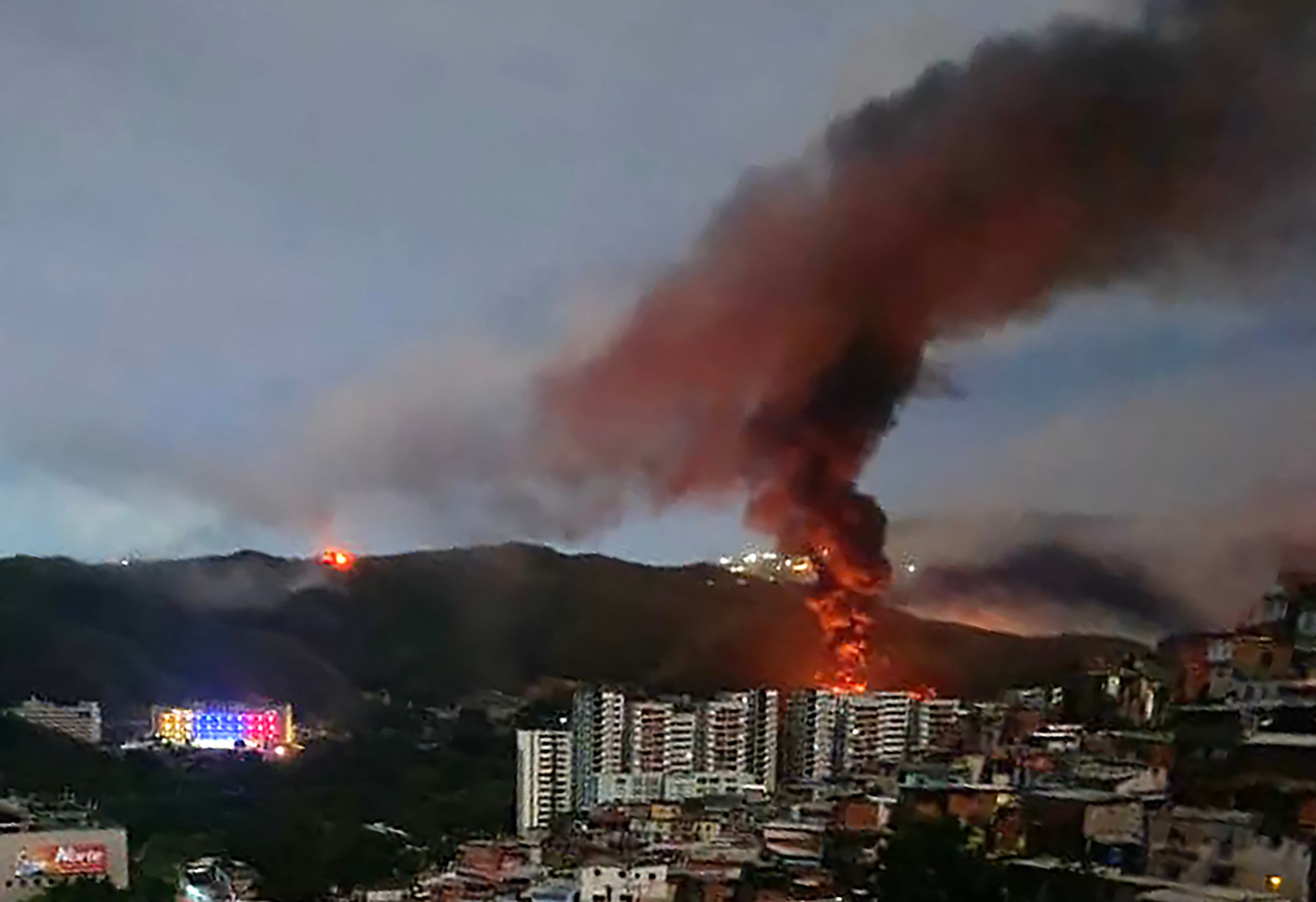
The entire mission hinged on a narrow break in Venezuela’s weather.
When that window opened, the U.S. military moved fast, launching more than 150 aircraft from 20 bases in a high-risk operation to capture Venezuelan leader Nicolás Maduro from the country’s populated capital over the weekend.
After a tightly synchronized mission that lasted less than five hours from authorization to exfiltration, Maduro and his wife, Cilia Flores, were taken Saturday by U.S. forces from their Caracas compound, according to President Donald Trump and Gen. Dan Caine, the chairman of the Joint Chiefs of Staff.
RELATED
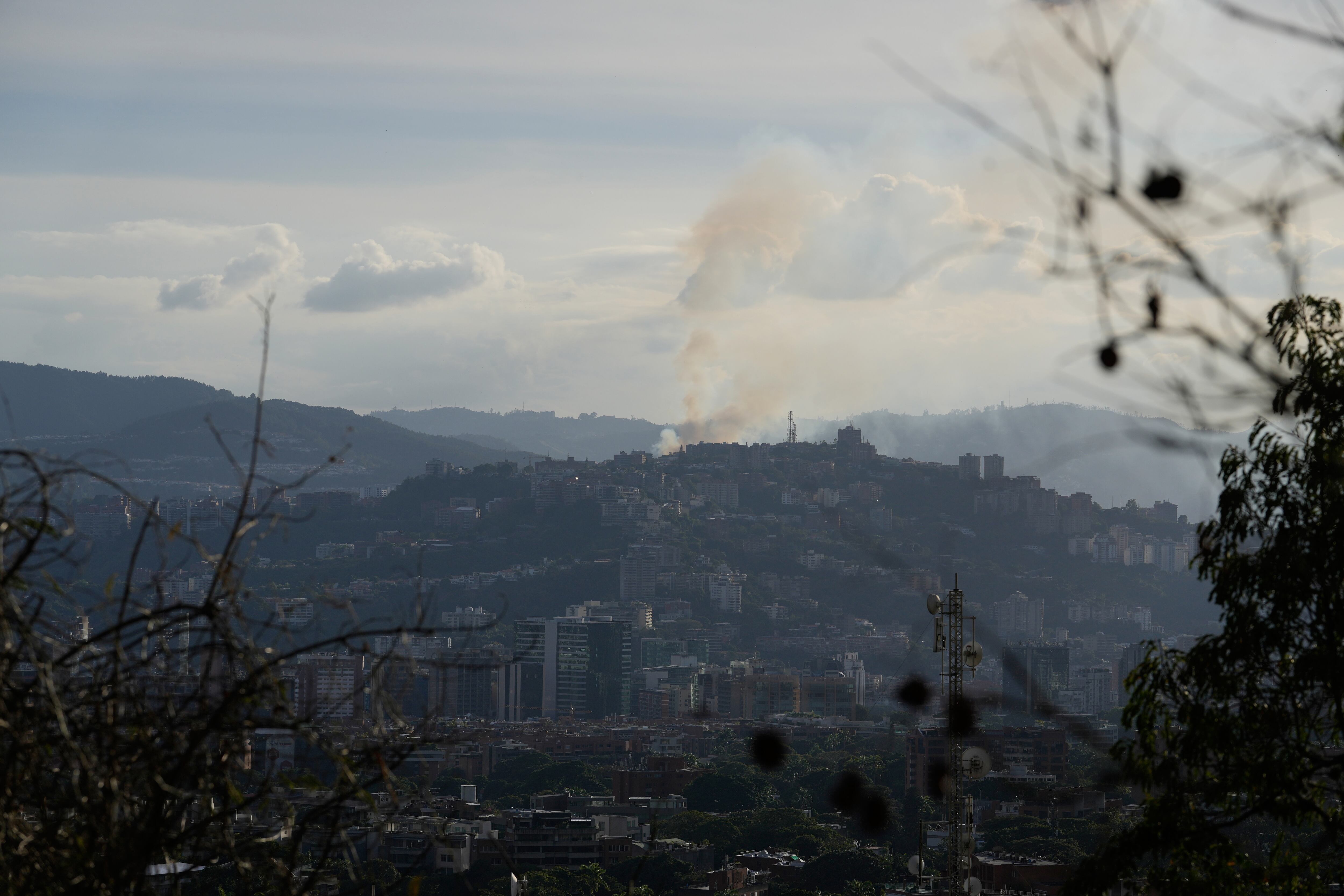
One defense expert, who was not involved in the operation, said that unlike past regime-change operations that involved the deployment of troops en masse, this operation appeared to have been designed to be precise.
“This was surgical,” Carlton Haelig, a fellow with the defense program at the Center for a New American Security, told Military Times. “But in terms of the tactical and support elements surrounding it, it was still relatively large scale.”
Though many details remain opaque, the mission, dubbed Operation Absolute Resolve, offered a rare public look at how today’s military plans and executes complicated, high-stakes interagency operations.
Months of planning, days of waiting
According to Caine, intelligence planning for the mission began months earlier and relied heavily on intelligence work to track Maduro’s whereabouts — “where he lived, where he traveled, what he ate, what he wore,” — and even information about his pets.
In a press conference Saturday, Caine said the apprehension would not have been possible without the Central Intelligence Agency, National Security Agency and the National Geospatial-Intelligence Agency, though he did not elaborate on each branch’s exact contributions.
Adam Taichi Kraft, a former intelligence collection strategist with the Defense Intelligence Agency who now consults on national security issues, speaking generally, said that for missions like this, information gathering never stops.
“Intelligence collection is going on 24/7, all around the world,” he said in an interview with Military Times. “You cannot hide; we are in a zero-privacy world.”
He emphasized that watching people’s behavior — whether in person or online — cannot be understated.
“If you are breathing oxygen, if you leave a fingerprint on a cab door, if you go to the doctor, if you order Starbucks, you are opening yourself up to surveillance,” he said.
Haelig said mapping the patterns of Maduro’s life was essential, but equally important would also be the military intelligence that enables U.S. forces to safely enter and exit a targeted area.
“Most of that comes from knowing the enemy’s order of battle — where their defensive assets are positioned. What are their response capabilities? What needs to occur in order to take those capabilities offline — whether that’s kinetically — through missile and air strikes — or by other means like electronic jamming,” he said.
Outlets including Reuters and The New York Times reported that the U.S. Army’s elite Delta Force practiced the extraction using a mockup of Maduro’s compound, but officials have not publicly confirmed which units were involved in the mission.
Even with extensive preparation, operations of this scale carry inherent uncertainty, including the possibility of shifting air defense and unseen threats along a route, Haelig said.
Those risks, he said, “were almost certainly something that was in the back of the minds of all of the planners and the operators themselves.”
And yet, the final go-ahead hinged on weather. In a Saturday morning phone interview on “Fox and Friends Weekend,” Trump said military forces had been waiting for “days” until the weather was right.

Into Caracas
Trump gave the green light at 10:46 p.m. Eastern Standard Time on Jan. 2, according to Caine, and over 150 aircraft began to launch across the Western Hemisphere.
“As the night began, the helicopters took off with the extraction force, which included law enforcement officers, and began their flight into Venezuela at 100 feet above the water,” Caine said in a statement.
The helicopters, skimming the water at such a low altitude to avoid detection, were protected by a fleet that included fighter jets, bombers and surveillance aircrafts.
After clearing the last stretch of high terrain, leaders determined that the force had maintained the element of surprise, Caine said.
The force descended.
Shortly after one in the morning Saturday, helicopters arrived at Maduro’s compound. A firefight ensued, and according to Caine, one aircraft was hit but did not sustain catastrophic damage and was able to remain flyable.
Trump said in his “Fox and Friends Weekend” interview that Maduro “got bum-rushed so fast” in “a house that was more like a fortress than a house.”
By 3:29 a.m., the force had left the compound with Maduro and his wife and were “over the water,” Caine said, after multiple engagements.
Trump on Saturday posted a photo of a blindfolded man who he said was Maduro post-capture aboard the USS Iwo Jima. Maduro is now facing federal criminal charges in New York.
Defense Secretary Pete Hegseth said Monday in a speech that nearly 200 Americans were on the ground in Caracas during the operation; he did not specify if that number represented soldiers or others supporting the operation.
When asked to clarify if special operations forces were involved in the mission, the Pentagon declined to comment citing operational security.
Col. Allie Weiskopf, the U.S. Special Operations Command director of public affairs, said in an email Tuesday that the operation belonged to the U.S. Southern Command.
Haelig said that many have speculated — based on the rotary wing aircraft seen in videos posted on social media by people on the ground in Venezuela — that the 160th Special Operations Aviation Regiment was involved in the mission. That unit, known as the Night Stalkers, is trained for risky aviation missions at low altitudes.
“They work equally with Delta Force and SEAL Team 6 on missions like this,” he said, adding that “both are absolutely capable and trained for high value target missions.” Delta Force and SEAL Team 6 are elite units trained to conduct the military’s most sensitive operations — often at night and in close coordination with intelligence agencies.
The people selected for these missions, Kraft said, are extremely high caliber and often handpicked.
“These guys are so well-rehearsed and so mature,” he said, adding “there are contingencies and branch plans as part of training. They’re always practicing. So if something goes wrong, they’re able to accomplish the mission regardless.”
Eve Sampson is a reporter and former Army officer. She has covered conflict across the world, writing for The New York Times, The Washington Post and The Associated Press.