The Army held an activation ceremony for its Futures and Concepts Command on Thursday at Fort Eustis, Virginia, marking the headquarters’ transition to full command status.
The move represents the organization’s shift from a center to a command under the Army’s Transformation and Training Command, reaffirming its authority in force design and development as the Army accelerates modernization efforts.
The official activation order, read during the ceremony, said the unit was formally activated in October 2025.
The Futures and Concepts Command, or FCC, is charged with determining what the Army will look like years from now by developing how its units are organized, what kinds of capabilities they will need and how they will be expected to fight.
According to the service, FCC serves as the “architect of the Army,” by developing operational concepts, experimenting with them and translating those findings to decide what the force will need years down the road.
The activation follows a sweeping reorganization in 2025 in which the Army merged its modernization and training headquarters into a new command, known as the Transformation and Training Command, or T2COM, under which FCC will fall.
Lifting the FCC to command status gives the organization more institutional weight and resources.
“Operating as a center and not a fully resourced command, we lacked some of the tools necessary to complete this important work. Today’s ceremony commemorates how we fix that,” said Gen. David Hodne, the commanding general of the Army Transformation and Training Command.
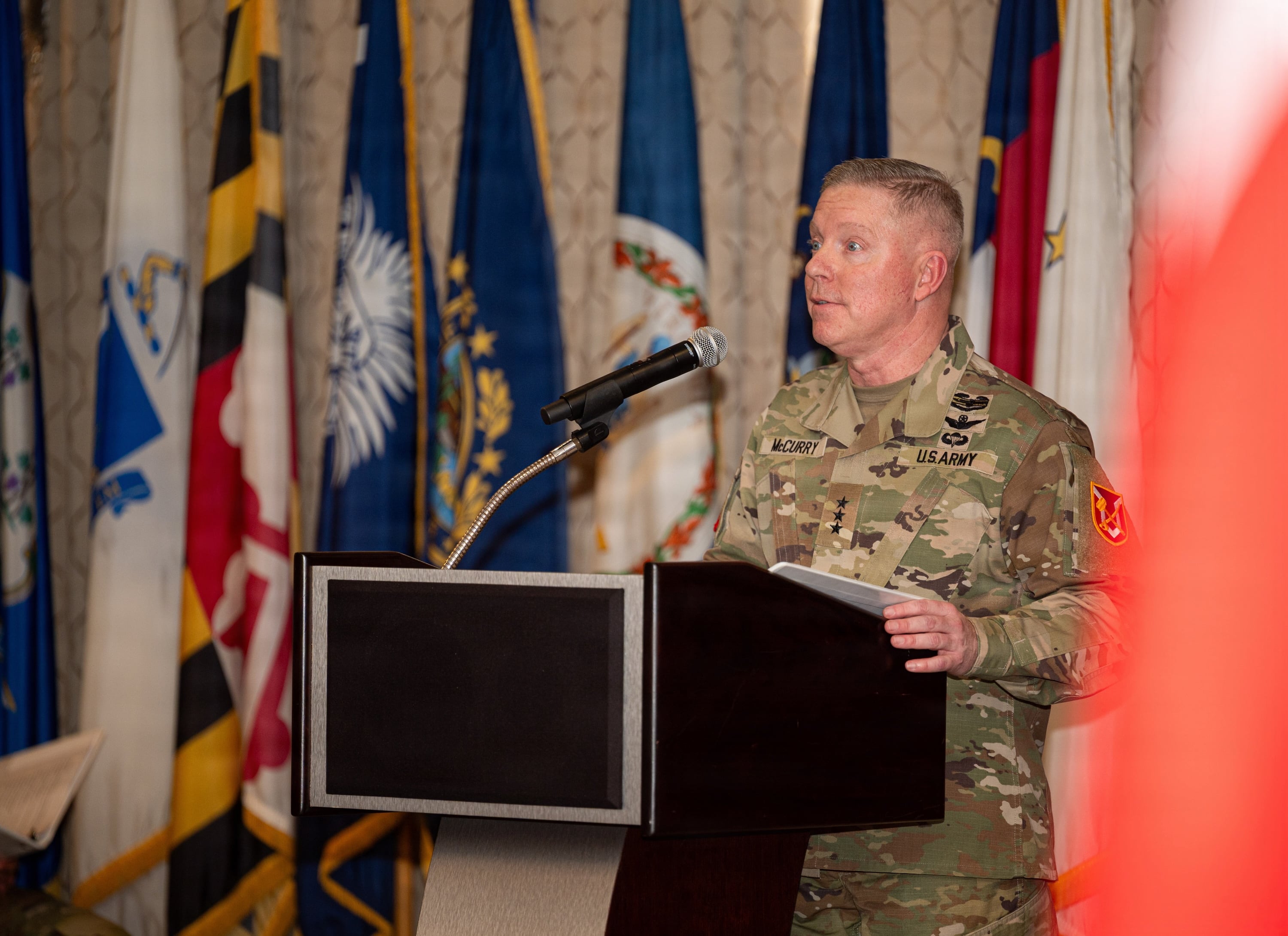
Lt. Gen. Michael McCurry, FCC’s commander, said during the ceremony that future conflicts will hinge not only on weapons, but ideas.
“It is an era of accelerating change and renewed great power competition. In that fight, the intellectual high ground is the most vital terrain we can seize and hold. It is here, within this command, that the intellectual work of winning the next war will be done,” he said.
Eve Sampson is a reporter and former Army officer. She has covered conflict across the world, writing for The New York Times, The Washington Post and The Associated Press.