Warfare has always evolved faster than the institutions tasked with managing its consequences, and Russia’s war in Ukraine has made this reality unmistakably clear. Small, inexpensive drones dominate the battlefield and are deployed relentlessly to conduct reconnaissance, deliver precision strikes, direct artillery and turn the front lines into a porous landmass. What we are all seeing is a new type of war dominated by violence that is fundamentally different from the global war on terror.
What is less frequently recognized is how this transformation has radically altered the injuries soldiers sustain on the battlefield. Drone warfare has exposed how the medical demands of future wars will require a revolution in battlefield medicine.
For decades, the cornerstone of U.S. battlefield medical training has been tactical combat casualty care, or TCCC. Developed in response to preventable casualties from the Vietnam War and continuously modified by committees of physicians, medics and combat veterans since 1996, TCCC has saved countless lives. Its focus on hemorrhage control, airway management and rapid evacuation was perfectly suited for conflicts in Iraq and Afghanistan, where blast injuries from improvised explosive devices and small-arms fire predominated and air superiority allowed for relatively rapid medical evacuation.
But the drone-dominated battlefield is different and, just like contemporary technology, more complex. In Ukraine, soldiers are sustaining complicated polytrauma from blasts, high-temperature burns from thermobaric and incendiary munitions and traumatic brain injuries. As anyone can see from the graphic videos posted on social media: Drones strike without warning, evacuation corridors are targeted and casualties sometimes lie untreated for hours or days.
Basic medical instruction given to soldiers today still reflects assumptions rooted in the war on terror such as predictable casualty flows and reliable evacuation timelines. However, in a drone-plagued war, those assumptions will collapse as the front line blurs, our capacity for movement and maneuver is limited and medical personnel become targets.
Our medical priority will no longer solely be to stop the bleeding and evacuate. Casualties will face prolonged field care, repeated blast exposure, horrifying burns and neurological injury on a scale foreign to even our most experienced medical personnel.
Despite the grim situation, there are many paths forward to meet these new challenges.
Initiatives across the U.S. military, such as the Army’s comprehensive medical modernization strategy, are already adapting to contemporary concerns, but there needs to be further awareness of the changes needed.
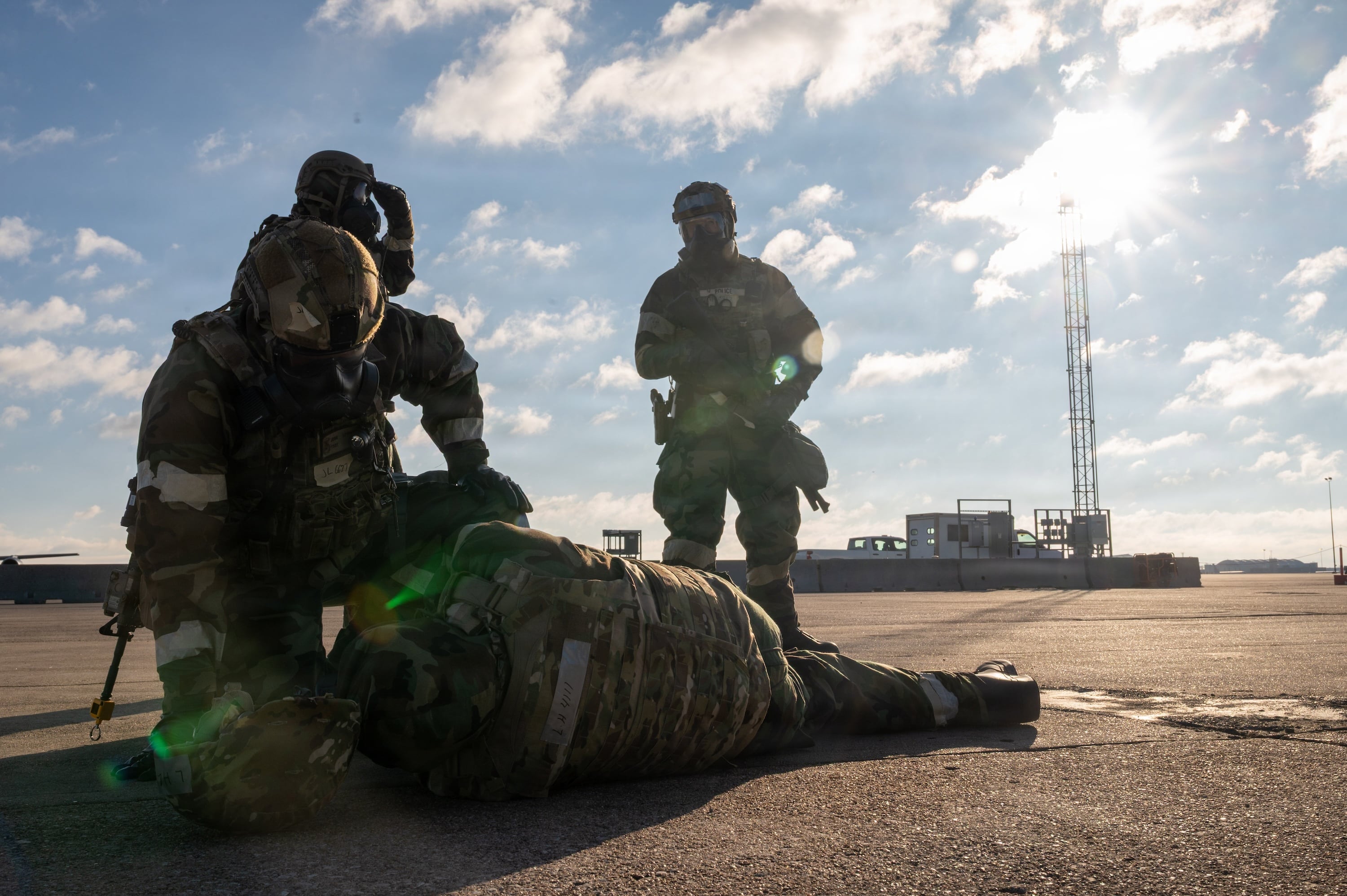
Some changes will be rooted in education and training. For example, we can fundamentally alter how we teach medical skills in basic training and initial entry pipelines. Hemorrhage control remains essential, although no longer solely sufficient. Soldiers and medics need more advanced education on blast and burn wound management, prolonged field care and neurological injuries. Training, from medics to physicians, must also focus on operating while concealed, dispersed and without immediate evacuation support.
Furthermore, we must rethink the logistics of combat medical care, starting with what is in the Individual First Aid Kit, or IFAK. The modern IFAK is optimized for bleeding control and rapid handoff; however, in a drone-saturated environment, kits should reflect prolonged care realities. Research is required to develop an optimized IFAK for drone warfare, and this need is rapidly approaching. New IFAKs will likely require advanced-burn dressings; tools for managing blast injuries; medications for pain, infection, and neuroprotection; and equipment that balances effectiveness with concealment and weight.
Additionally, the organization and placement of medical units will change because the war in Ukraine has demonstrated that large, centralized aid stations are vulnerable and often untenable. Medical care will be more distributed and mobile with better camouflage and protection via anti-drone netting and air defense capabilities. Inherent to this will also be higher levels of medical autonomy at lower echelons.
Crucially, these challenges are not limited to medicine, and the necessity of transforming battlefield medical care is inseparable from the broader logistical revolution demanded by drone warfare. Supplying medical equipment under constant aerial threat requires rethinking how we maintain, supply and transport our forces. If drones can disrupt convoys and destroy supply depots with impunity, then every logistical branch will be forced to evolve alongside medical services.
We should not wait for American soldiers to be engaged in a drone war to modernize how we train, equip and support those tasked with saving them. Battlefield medicine must evolve at the same pace as battlefield violence, or we risk losing lives we could have saved. Critically, it is up to all of us, at every echelon, to adapt to the needs of tomorrow and win our nation’s wars.
RJ Russel is a 2022 graduate of West Point. He is currently a fourth-year medical student at Harvard Medical School and will soon start an emergency medicine residency in the U.S. Army. The views expressed are those of the author and do not reflect the official policy of the Department of the Army, the Defense Department or the U.S. government.